


FXOpen

For several weeks, the oil market remained directly influenced by the US-Iran tensions. Threats to close the Strait of Hormuz kept Brent prices within the $97–110 range. Overnight on 8 April, the parties announced a two-week ceasefire, and the Strait of Hormuz reopened to shipping, immediately removing the accumulated geopolitical premium from prices. Brent declined by over 10%, falling towards the $92 per barrel level.
However, later the same day, the ceasefire came under pressure. Gulf states reported Iranian drone and missile strikes, with the UAE, Kuwait, and Bahrain confirming attacks on oil facilities and infrastructure. Iran subsequently suspended vessel transit through the Strait of Hormuz, citing a breach of the agreement by Israel, which had conducted strikes in Lebanon. Israel clarified that the ceasefire does not apply to Lebanon.
Negotiations are scheduled for 10 April in Islamabad, although the outcome remains uncertain. The market continues to show high sensitivity to any changes in diplomatic or military rhetoric. In parallel, OPEC+ approved an increase in oil production quotas on Sunday, adding further supply-side pressure.
Technical Picture
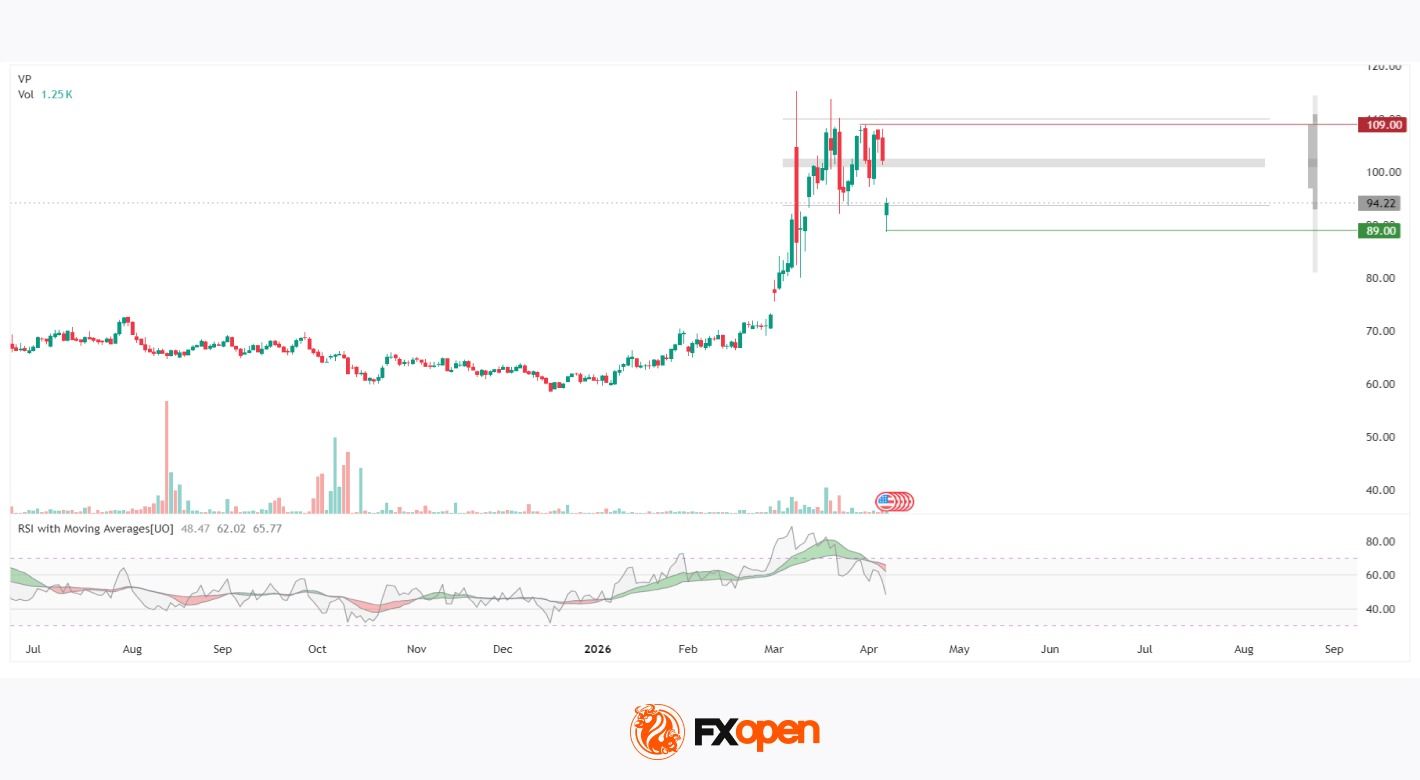
On the daily chart, the prolonged consolidation within the $60–75 range concluded with an impulsive rally towards $115, driven by geopolitical escalation in February–March 2026. Notably, on 18 March, vertical volume recorded a peak spike, confirming the climactic nature of the move.
The market failed to sustain these elevated levels, and the subsequent correction pushed prices down to $89, where the price approached the lower boundary of a horizontal volume cluster. Above current levels, the market profile remains dense, with the highest concentration of trading activity (POC) located in the $101–103 range. This area could serve as the nearest upside reference, with a breakout requiring significant buyer participation. The next resistance level could be $109.
For sellers, the key support level could be $89. A break below this level aligns with the base of the previous session and may influence short-term bearish positioning.
The RSI with Moving Averages (nominal) indicator presents a similarly notable picture. The RSI has remained below both moving averages for the past 10 days, with both MAs trending downward. This signals a weakening bullish impulse and a shift towards a neutral-to-bearish oscillator configuration.
Key Takeaways
Brent prices corrected sharply following the removal of the geopolitical premium and increased supply pressure from OPEC+. From a technical perspective, the price remains below the POC zone, while the RSI+MA configuration reflects a bearish context. The key range levels—89 and 109—could be reference points for the upcoming session.
Start trading commodity CFDs with tight spreads (additional fees may apply). Open your trading account now or learn more about trading commodity CFDs with FXOpen.
This article represents the opinion of the Companies operating under the FXOpen brand only. It is not to be construed as an offer, solicitation, or recommendation with respect to products and services provided by the Companies operating under the FXOpen brand, nor is it to be considered financial advice.
Stay ahead of the market!
Subscribe now to our mailing list and receive the latest market news and insights delivered directly to your inbox.


Latest articles

European Currencies Strengthen: Dollar Under Pressure Following Ceasefire News
European currencies posted solid gains, while the US dollar came under pressure amid easing geopolitical tensions following reports of a two-week ceasefire agreement between the United States and Iran. Reduced demand for so-called safe-haven assets acted as the primary driver,


Market Analysis: AUD/USD And NZD/USD Turn Bullish, Is Rally Set to Extend?
AUD/USD started a fresh increase above 0.6970 and 0.7000. NZD/USD is also rising and might aim for more gains above 0.5850.
Important Takeaways for AUD USD and NZD USD Analysis Today
· The Aussie Dollar started