


FXOpen
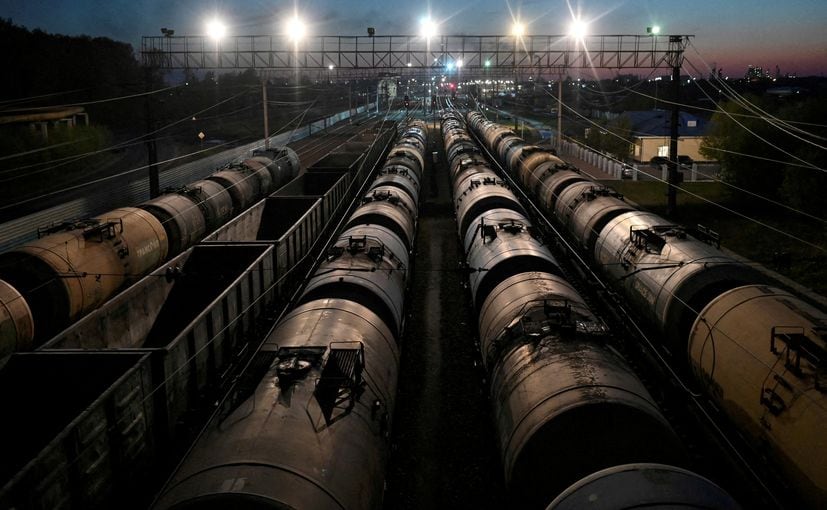
As you know, Iran launched a missile attack on Israel over the weekend. This could greatly increase the price of Brent oil, given that Iran is one of the top 10 oil producing countries, and the fact of the strike could provoke further escalation in the region.
However, at the beginning of the trading week, the price of Brent oil is below the levels at which they were at the end of last week. How so?
It is acceptable to assume the impact that the price reflects market risks and the expectations of its participants:
→ As the media wrote last week, the blow was expected after Israel’s attack on the Iranian mission.
→ The risk of escalation is not as high as it could be. According to the Washington Post, Biden advises Netanyahu to “slow down” after the Iranian attack. Administration officials said the United States would not join in any response to Tehran's attack and suggested Israel avoid escalation.
How might the situation develop further on the oil market?
From the point of view of technical analysis of the price of Brent oil, as we wrote on April 4, the upper limit of the blue channel is around USD 92 per barrel of Brent.
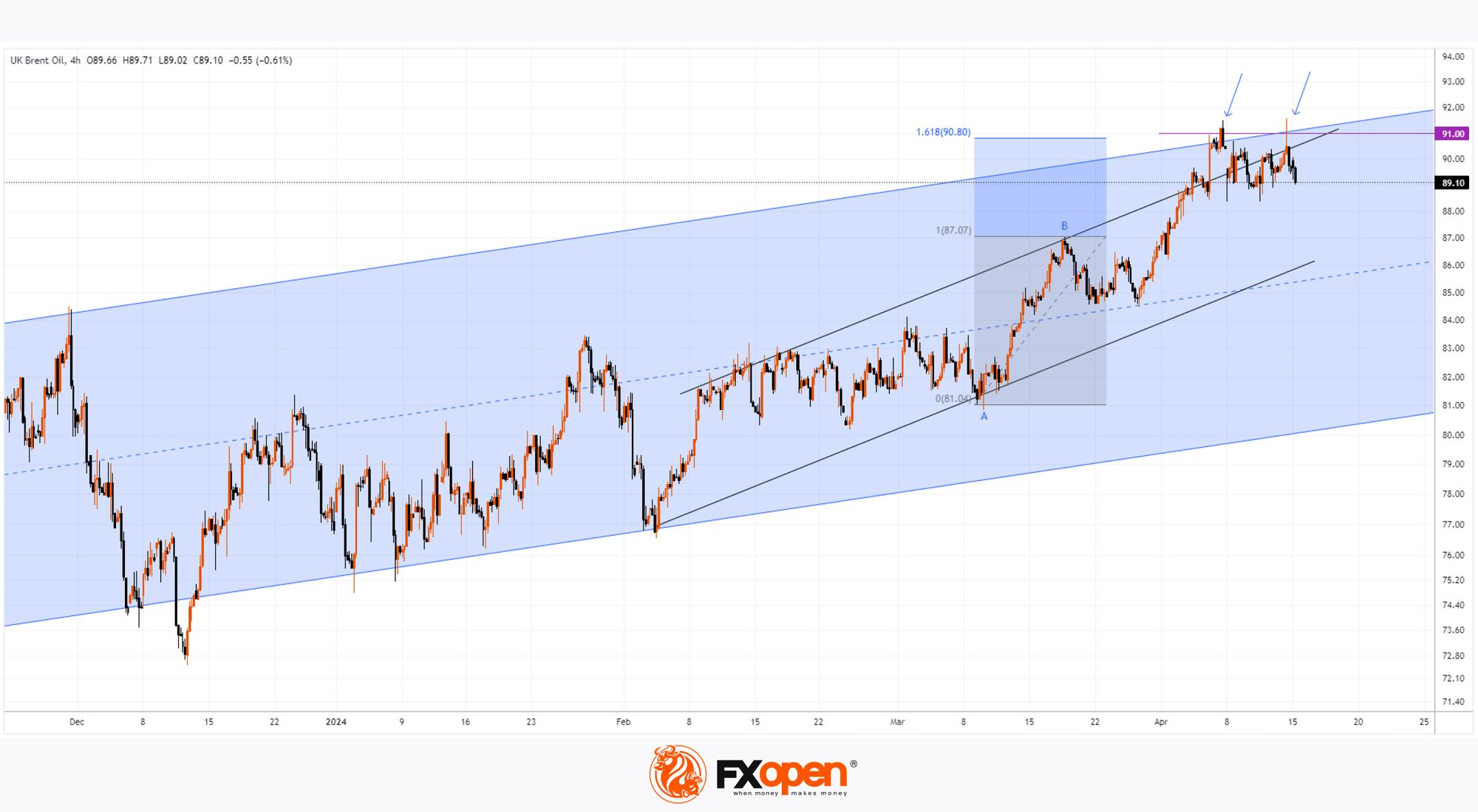
→ Fears of escalation pushed the price beyond the USD 91 level, but it failed to gain a foothold there.
→ The price quickly returned below the USD 91 level (as shown by the arrows) — a sign of bearish activity.
→ Resistance to price growth is provided by both the upper border of the blue channel and the upper border of the intermediate ascending channel (shown by black lines).
Please note that if we take the A→B impulse as a 100% basis, then at the price level of USD 90.80 per barrel of Brent there is a Fibonacci resistance level of 1.618.
Therefore, there is reason to assume that the price of oil may form a correction to the lower black support line if there are no signs of escalation (then the price of oil may rise closer to USD 100, as CNBC writes). And for the current US authorities, it is believed that rising oil prices are unprofitable due to the upcoming elections.
Start trading commodity CFDs with tight spreads (additional fees may apply). Open your trading account now or learn more about trading commodity CFDs with FXOpen.
This article represents the opinion of the Companies operating under the FXOpen brand only. It is not to be construed as an offer, solicitation, or recommendation with respect to products and services provided by the Companies operating under the FXOpen brand, nor is it to be considered financial advice.
Stay ahead of the market!
Subscribe now to our mailing list and receive the latest market news and insights delivered directly to your inbox.


Latest articles

The Real Driver Behind the Dollar Rally: Market Insights with Gary Thomson
The US dollar has been firm, but the drivers behind the move may be more complex than they first appear.
While geopolitical tension and shifts in risk sentiment play a role, current price behaviour seems increasingly influenced by inflation expectations

EUR/USD and USD/CHF Pull Back: Market Reacts to Fundamentals
European currencies have shown a recovery in recent trading sessions after their recent decline, displaying early signs of a reversal. The US dollar is weakening amid expectations surrounding upcoming US macroeconomic data, while market participants are reassessing their short-term positions

Weak Data Weigh on the Dollar: Market Awaits Trend Confirmation
The US dollar is retreating from recent highs, moving into a moderate correction after a prolonged period of gains. Pressure on the currency is building amid weaker-than-expected macroeconomic data, while market participants adopt a wait-and-see approach ahead of key labour