


FXOpen

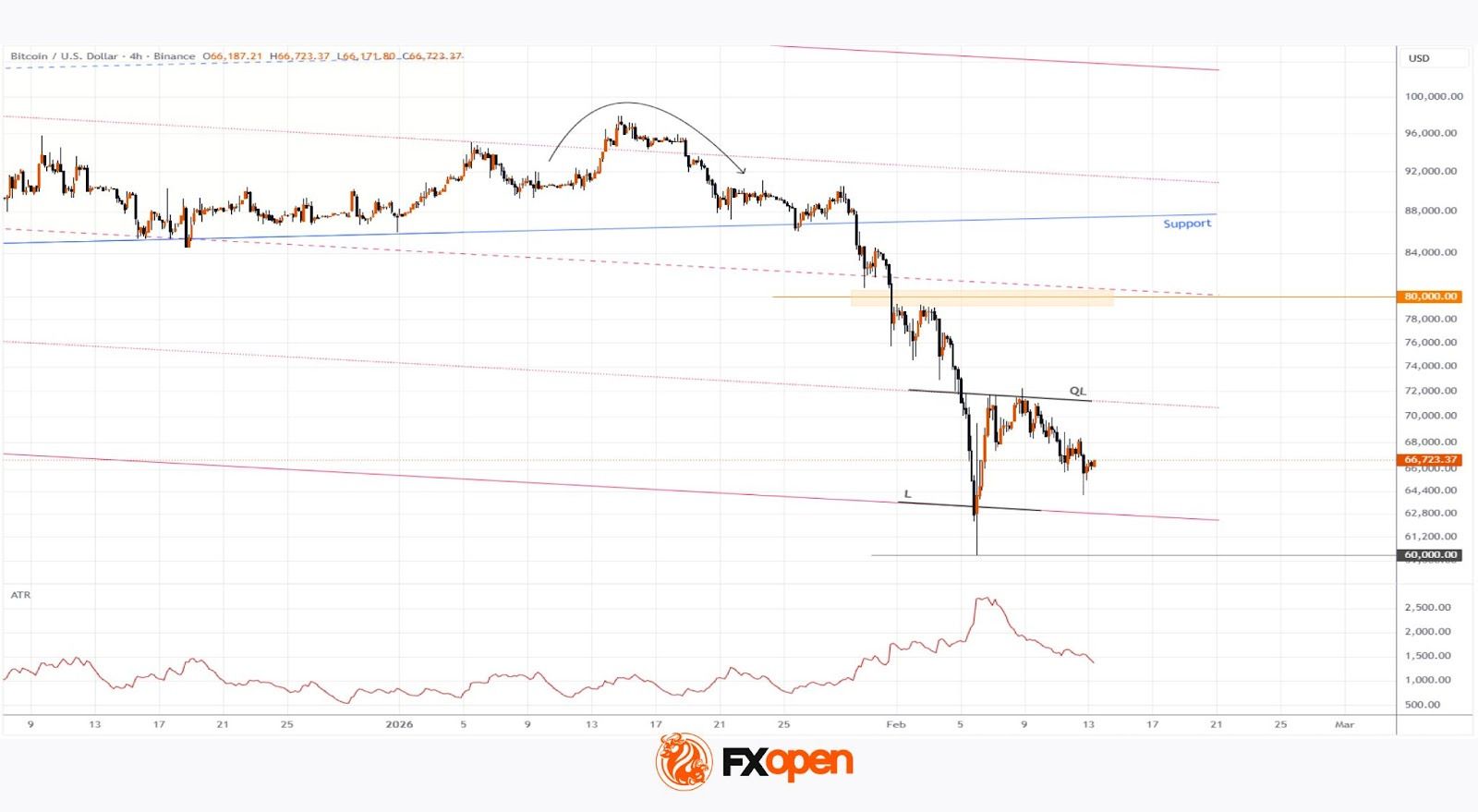
The previous Consumer Price Index (CPI) report was published on 13 January and had a significant impact on Bitcoin’s price. As the BTC/USD chart shows:
→ shortly after the release, the price surged aggressively to the 14 January peak;
→ it then reversed sharply lower (a sign of a bull trap), creating a bearish outlook — which we highlighted on 21 January;
→ subsequently, it broke through multi-month support and entered an accelerated decline towards the $60k area.
For this reason, today’s US inflation report (16:30, GMT+3) is drawing close attention across multiple markets, as it may have a substantial effect on both the dollar and traders’ appetite for risk assets, including Bitcoin.
Technical Analysis of the BTC/USD Chart
Bitcoin’s price swings have formed a descending channel, shown in red. Within this framework:
→ the lower boundary (L) appears to be key support. When the price dipped below it on 6 February, aggressive buyers stepped in, resulting in a candle with a long lower shadow;
→ the QL line, which divides the lower half of the channel into two sections, is acting as resistance — as reflected in price action on 9 February.
The ATR indicator is trending lower, signalling declining volatility, which suggests the market is awaiting important news. Higher inflation is generally seen as a factor that could delay interest rate cuts, strengthen the dollar and bond yields, and weigh on BTC/USD. Conversely, softer inflation would be supportive for cryptocurrencies.
If the CPI release does not produce major surprises, Bitcoin may continue to trade within the broad L–QL range.
FXOpen offers the world's most popular cryptocurrency CFDs*, including Bitcoin and Ethereum. Floating spreads, 1:2 leverage — at your service (additional fees may apply). Open your trading account now or learn more about crypto CFD trading with FXOpen.
*Important: At FXOpen UK, Cryptocurrency trading via CFDs is only available to our Professional clients. They are not available for trading by Retail clients. To find out more information about how this may affect you, please get in touch with our team.
This article represents the opinion of the Companies operating under the FXOpen brand only. It is not to be construed as an offer, solicitation, or recommendation with respect to products and services provided by the Companies operating under the FXOpen brand, nor is it to be considered financial advice.
Stay ahead of the market!
Subscribe now to our mailing list and receive the latest market news and insights delivered directly to your inbox.


Latest articles

Weak Data Weigh on the Dollar: Market Awaits Trend Confirmation
The US dollar is retreating from recent highs, moving into a moderate correction after a prolonged period of gains. Pressure on the currency is building amid weaker-than-expected macroeconomic data, while market participants adopt a wait-and-see approach ahead of key labour

Market Analysis: EUR/USD Aims Recovery While USD/JPY Gives Back Recent Gains
EUR/USD is recovering losses from 1.1450. USD/JPY is correcting gains from 160.50 and might decline further below 158.00.
Important Takeaways for EUR/USD and USD/JPY Analysis Today
· The Euro struggled to stay in a

European Currencies Decline: Pound Hits New Lows, Euro Under Pressure
European currencies continue to weaken against the US dollar amid rising geopolitical tensions and increased demand for safe-haven and liquid assets. Market participants are reducing exposure to riskier instruments, putting pressure on both the euro and the pound. Additional support