


FXOpen

The main event of the week ahead is the ECB interest rate decision on Thursday. The ECB is in a tough spot as core inflation dropped to 0.4%, and the stronger Euro makes it difficult for the central bank to fulfill its mandate.
One of the major themes on the currency market this summer was an extraordinarily strong Euro. The Euro appreciated not only against the USD, but also against other G10 currencies – GBP, JPY, for instance. While the USD declined significantly, the EUR rose, and the main EUR exchange rate, the EURUSD, even traded above 1.20.
The problem for the ECB is that a stronger currency makes it difficult to fulfill its price stability mandate. As a reminder, the ECB has a mandate to bring (and keep) inflation below, but close, to 2%. The favorite inflation measure is the Core HICP – the one that does not consider energy prices, as they tend to distort data. To the surprise of many, it dropped to 0.4% on expectations of 0.9%, leaving the ECB in a tough spot ahead of Thursday’s interest rate decision.
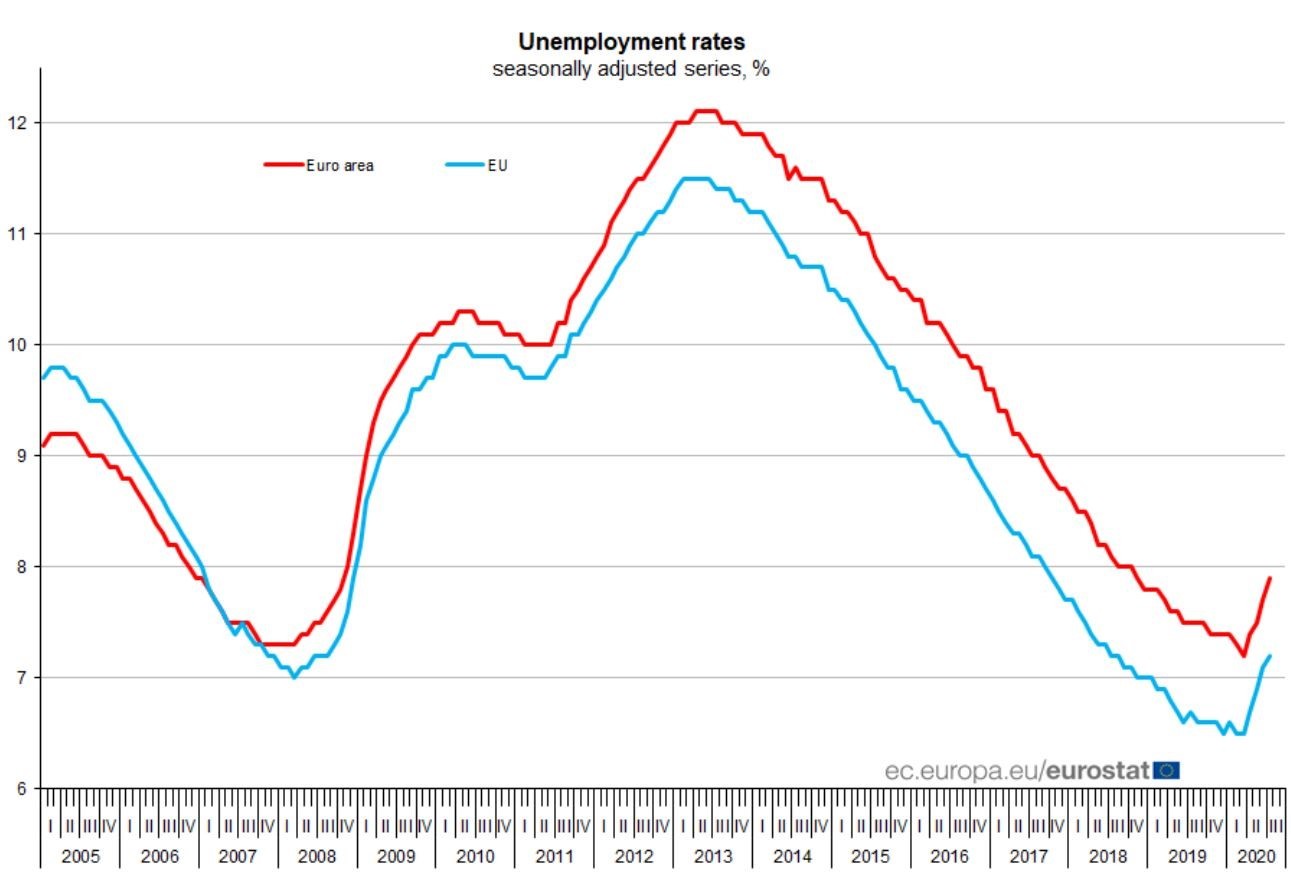
Higher Unemployment and Low Inflation in the Euro Area
The Unemployment Rate ticked higher in the Euro area due to the coronavirus crisis. If it were not for the government-supported programs, the number would have looked even worse.
The problem for the ECB is that low inflation and high unemployment is a recipe for disaster, considering that the interest rates are already at the lower boundary. How to fight low inflation when the deposit facility rate is already below zero for several years now?
All the other unconventional monetary policy tools were exhausted by the ECB so far. It offered cheap loans via TLTROs, it extended the quantitative easing program, and it even offered extended forward guidance compared with what the market participants were used to so far. Yet, the EUR strengthened on the back of the optimism related to the Recovery Fund deal and the joint debt issuance handled by the European Commission.
The ECB made it clear in the past that it does not tolerate the EURUSD exchange rate higher than 1.20. Last week, when the EURUSD traded above 1.20, the ECB’s Chief Economist intervened and delivered a verbal intervention. He just mentioned that, while the ECB does not target the exchange rate, the EURUSD rate matters. And just like that, the EURUSD dropped from 1.20 to 1.18 in the next couple of days.
Expect increased volatility ahead and during the ECB interest rate decision and press conference this coming Thursday.
This article represents the opinion of the Companies operating under the FXOpen brand only. It is not to be construed as an offer, solicitation, or recommendation with respect to products and services provided by the Companies operating under the FXOpen brand, nor is it to be considered financial advice.
Stay ahead of the market!
Subscribe now to our mailing list and receive the latest market news and insights delivered directly to your inbox.


Latest articles

S&P 500 Index: Chart Analysis After Friday’s Sell-Off
Trading on 12 December was overshadowed by a sharp decline in the S&P 500 (US SPX 500 mini on FXOpen), with the session low approaching December’s previous trough.
Among the key fundamental drivers behind Friday’s drop

Market Analysis: AUD/USD and NZD/USD Test Support, Break or Bounce Next?
AUD/USD is attempting a fresh increase from 0.6630. NZD/USD is consolidating and could aim for a move above 0.5800 in the short term.
Important Takeaways for AUD/USD and NZD/USD Analysis Today
· The Aussie Dollar

USD/JPY Slides Towards Key Support
A Bank of Japan monetary policy meeting is due this week, and expectations around the decision are supporting the yen today. Traders increasingly believe that the central bank may raise its policy rate by 25 basis points to 0.75%