


FXOpen

Financial markets prepare for a volatile trading week ahead. The U.S. elections are due on November 3rd, and the complex process of electing the new President and the Congress’ composition may delay the outcome for days or even weeks.
The U.S. dollar, as well as the U.S. stock market, are main volatility drivers in financial markets. For the past several months, neither the USD nor the stock market did nothing – they both awaited the U.S. elections outcome.
Anything is possible this week. We could easily know the name of the United States’ President for the next four years right on Wednesday morning. But we could also have to wait for votes to be counted to find out the real winner. In both cases, the market’s volatility will go through the roof.
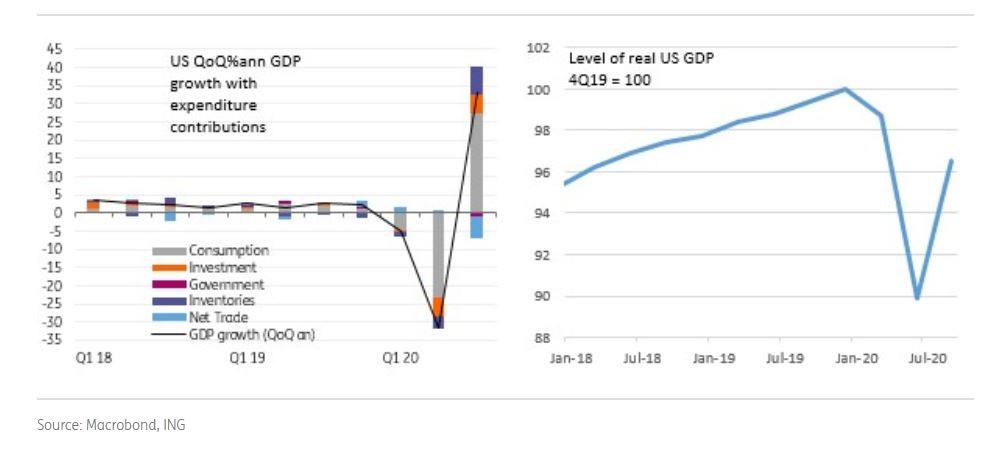
In the meantime, the US GDP showed an impressive recovery from the coronavirus pandemic. Last week saw a record rebound as the U.S. economy grew 33.1% on an annualized rate in the third quarter of the year.
Considering that many European economies just entered their second lockdown and that Asian economies managed to control the pandemic, the economic growth differential may be the one to drive the price action for the months remained until the end of the trading year.
Three Central Banks Plus the NFP
The U.S. elections will likely steal the thunder from this trading week, but some other important economic events are worth monitoring. Three central banks announce their policy decisions this week – the Reserve Bank of Australia tomorrow, the Federal Reserve on Wednesday, and the Bank of England on Friday.
While the market does not expect something new from the RBA, the Fed and the BOE may bring some surprises. That is especially the case of the Bank of England as the market priced in an increase in the quantitative easing program. Coupled with the new lockdown to start the same day in the United Kingdom, the combination of the two may weigh on the GBP.
The trading week ends with the Non-Farm Payrolls and the unemployment rate on Friday. However, no economic event this week will outpace in importance the U.S. elections. Therefore, the sooner the market knows the elections’ outcome, the better for financial market participants.
This article represents the opinion of the Companies operating under the FXOpen brand only. It is not to be construed as an offer, solicitation, or recommendation with respect to products and services provided by the Companies operating under the FXOpen brand, nor is it to be considered financial advice.
Stay ahead of the market!
Subscribe now to our mailing list and receive the latest market news and insights delivered directly to your inbox.


Latest articles


XAG/USD Analysis: Silver Drops to March Low
As seen on the XAG/USD chart, the price of silver fell to the $70 level and briefly pierced it, marking the lowest level since early February.
Although geopolitical tensions typically support demand for safe-haven assets, silver is under pressure

XBR/USD Analysis: Brent Crude Rises Above $110
Yesterday, Brent crude prices moved sharply higher, with the XBR/USD chart showing breakouts above local resistance levels. Today, the price has climbed above the $110 mark, bringing it close to the multi-year high recorded on 9 March.
The bullish