FXOpen
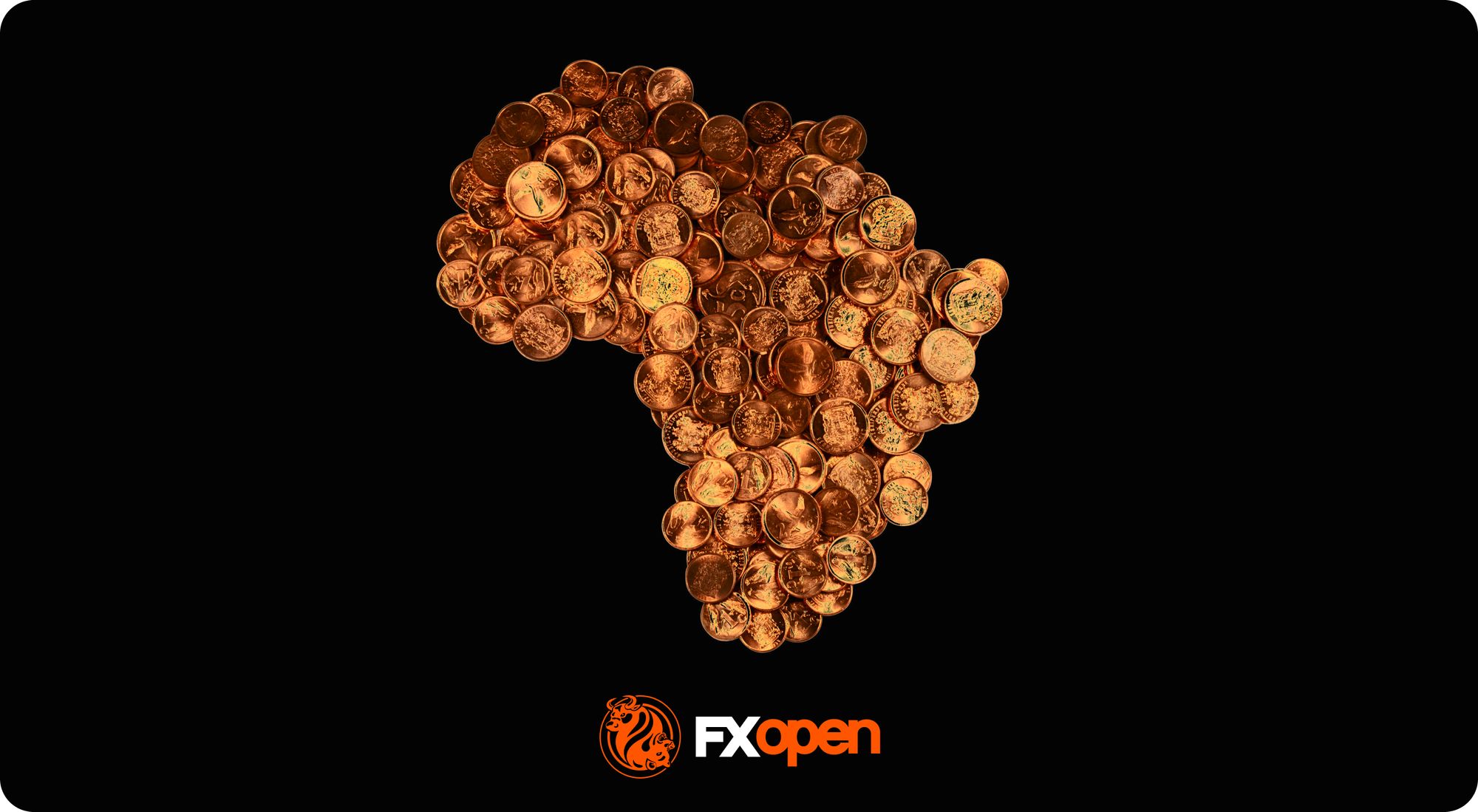
Africa’s currency landscape is as diverse as its economies. While many associate African currencies with volatility, several nations on the continent maintain strong units backed by robust fiscal policies and strategic ties to global markets. Understanding which currencies hold the most value can be useful for informed decision-making in foreign exchange trading, cross-border investments, and risk management.
In this article, we rank the 20 most valuable African currencies in 2026, based on their exchange rate against the US dollar, while exploring the economic factors that drive their performance.
The List of Currencies That Are Considered the Strongest in Africa in 2026
Below is the ranking of the 20 top-performing currencies in Africa in 2026. The US dollar remains the global benchmark for currency valuation, which is why this list is based on the exchange rates of African currencies against the US dollar.
The 20 strongest currencies in Africa are:
20. Algerian Dinar (DZD)
19. Kenyan Shilling (KES)
18. Cape Verdean Escudo (CVE)
17. Gambian Dalasi (GMD)
16. Mozambican Metical (MZN)
15. Egyptian Pound (EGP)
14. Mauritian Rupee (MUR)
13. Mauritanian Ouguiya (MRU)
12. Zambian Kwacha (ZMW)
8-11. Eswatini Lilangeni (SZL)
8-11. Lesotho Loti (LSL)
8-11. Namibian Dollar (NAD)
8-11. South African Rand (ZAR)
7. Eritrean Nakfa (ERN)
6. Seychellois Rupee (SCR)
5. Botswana Pula (BWP)
4. Ghanaian Cedi (GHS)
3. Moroccan Dirham (MAD)
2. Libyan Dinar (LYD)
1. Tunisian Dinar (TND)
*The rates are effective on the 16th of January, 2026.
20. Algerian Dinar (DZD)
Exchange rate: 1 USD = 130.22 DZD
The Algerian dinar (DZD) is the official currency of Algeria, North Africa’s largest country by land area. Algeria’s economy is heavily dependent on hydrocarbons, with oil and natural gas exports accounting for the majority of government revenue and foreign exchange earnings. The dinar operates under a managed float regime but has experienced pressure from fluctuating global oil prices and economic reforms aimed at diversification. Despite challenges, Algeria remains a key player in the region due to its vast natural resources.
19. Kenyan Shilling (KES)
Exchange rate: 1 USD = 128.97 KES
What is the currency in Kenya, Africa? The Kenyan shilling (KES) is the domestic currency of Kenya. It ranks as one of the weakest currencies in this top-20 list, but it remains vital for regional trade and investment. Kenya’s diversified economy is driven by agriculture, manufacturing, financial services, and a rapidly growing tech sector. Currency fluctuations are influenced by global market dynamics, domestic inflation, and monetary policy efforts by the Central Bank of Kenya to maintain economic stability.
18. Cape Verdean Escudo (CVE)
Exchange rate: 1 USD = 94.89 CVE
The Cape Verdean escudo (CVE) is the official currency of Cape Verde, also known as Cabo Verde, an island nation situated off the northwest coast of Africa. Introduced to replace the former Cape Verde real, the CVE has benefited from the country’s relatively stable economy. Cape Verde’s economic strength lies primarily in its well-developed services sector, with tourism serving as the principal growth driver. The nation’s strong links to the eurozone, where the escudo being pegged to the euro, also contribute to currency resilience.
17. Gambian Dalasi (GMD)
Exchange rate: 1 USD = 73.50 GMD
The Gambian dalasi (GMD) is a national currency of The Gambia. The country’s economy remains rooted in traditional agriculture, with groundnuts, rice, and livestock forming the main outputs. The Gambia has limited mineral and oil resources. Tourism and services are now the dominant drivers of economic output and act as a critical source of foreign exchange.
16. Mozambican Metical (MZN)
Exchange rate: 1 USD = 63.91 MZN
The Mozambican metical (MZN) is the official currency of Mozambique, a nation located along Africa’s southeastern coast. Historically, Mozambique used the colonial-era escudo before transitioning to the metical, which was redenominated in 2006 to stabilise the currency. Agriculture remains the backbone of the economy, with key exports including cotton, sugar cane, tobacco, and tea. Rich in natural resources such as natural gas, coal, and titanium, Mozambique has become an attractive destination for foreign direct investment, particularly in extractive industries.
15. Egyptian Pound (EGP)
Exchange rate: 1 USD = 47.24 EGP
The Egyptian pound (EGP) is known as one of the strongest currencies in East Africa. It is the official currency of Egypt, a densely populated nation in North Africa. Until 2001, the pound was backed by precious metals, but it now operates under a floating exchange rate system. Egypt’s banking sector is among the largest in Africa, and the EGP is also used informally in Sudan and the Gaza Strip. It remains one of the continent’s dominant currencies, supported by Egypt’s position as Africa’s second-largest economy by GDP (according to IMF data as of April 2025). The country’s key economic drivers include tourism, services, agriculture, and revenue from the Suez Canal, which is a major source of foreign currency inflows.
14. Mauritian Rupee (MUR)
Exchange rate: 1 USD = 46.30 MUR
The Mauritian rupee (MUR) is the official legal tender of the Republic of Mauritius and is primarily used for domestic financial transactions. Mauritius is one of the wealthiest nations in Africa in terms of GDP per capita (according to IMF data for 2024). Traditionally reliant on sugar and salt production, tourism, and the textile industry, Mauritius has diversified its economy. Growth sectors such as information and communications technology (ICT) and fisheries and fish processing are increasingly attracting foreign investment and strengthening the nation’s economic resilience.
13. Mauritanian Ouguiya (MRU)
Exchange rate: 1 USD = 40.04 MRU
The Mauritanian ouguiya (MRU) is the official currency of Mauritania, a country in northwest Africa. Agriculture and livestock remain the backbone of the economy, employing a large share of the population, though the sector is highly vulnerable to drought and climate change. Mineral resources are a key economic pillar, with iron ore accounting for almost half of total exports, complemented by gold and copper mining. Mauritania’s extensive Atlantic coastline also supports a well-developed fishing industry.
12. Zambian Kwacha (ZMW)
Exchange rate: 1 USD = 20.07 ZMW
The Zambian Kwacha (ZMW) is the official currency of Zambia, a landlocked country located in southern Africa. Introduced in 1968, it replaced the Zambian pound following independence from Britain. Although considered one of the strongest African currencies in nominal terms, the kwacha is not widely traded on international forex markets due to its susceptibility to inflationary pressures and exchange rate volatility. Zambia is Africa’s second-largest copper producer, making the currency highly sensitive to fluctuations in global copper prices. Key agricultural outputs include maize, tobacco, cotton, and soybeans, while emerging industries span textiles, food processing, and building materials.
8-11. Eswatini Lilangeni (SZL)
Exchange rate: 1 USD = 16.41 SZL
The lilangeni (SZL) is the official currency of the Kingdom of Eswatini (formerly Swaziland), a small landlocked nation in southern Africa. It’s pegged at parity to the South African rand, Lesotho Loti, and Namibian dollar under the Common Monetary Area (CMA). Manufacturing is the leading contributor to GDP, followed by agriculture, forestry, and mining. The country’s agricultural production includes sugarcane, maize, and citrus fruits. Eswatini also takes advantage of preferential access to the United States market under the African Growth and Opportunity Act (AGOA).
8-11. Lesotho Loti (LSL)
Exchange rate: 1 USD = 16.41 LSL
Lesotho Loti is included in the top 10 strongest currencies in Africa based on its exchange rate against the US dollar. The Loti (LSL) serves as the official currency of the Kingdom of Lesotho, a landlocked nation completely encircled by South Africa. Lesotho is economically integrated with its neighbour, and the South African rand is also accepted as legal tender. The loti is pegged to the rand, Namibian dollar, and Eswatini Lilangeni at parity under the Common Monetary Area agreement. The economy relies on agriculture, manufacturing, mining, and services, with the textile and garment industry being a key export sector. Lesotho is also developing its diamond mining and water export resources and is a member of the Southern African Customs Union (SACU).
8-11. Namibian Dollar (NAD)
Exchange rate: 1 USD = 16.41 NAD
The Namibian dollar (NAD) is the official currency of Namibia, pegged to the South African rand, Lesotho loti, and Eswatini Lilangeni at a one-to-one exchange rate under the Common Monetary Area. Namibia’s economy is driven by mining, manufacturing, agriculture, and tourism. Rich in mineral resources such as diamonds, uranium, copper, and gold, the country depends heavily on commodity exports. In July 2025, the World Bank reclassified Namibia as a lower-middle-income country, which may negatively affect the value of the Namibian dollar.
8-11. South African Rand (ZAR)
Exchange rate: 1 USD = 16.41 ZAR
The South African rand (ZAR) is among the top 10 currencies in Africa based on its exchange rate against the US dollar. It serves as the anchor currency for the Common Monetary Area, with Lesotho, Namibia, and Eswatini pegging their national currencies to the rand. South Africa remains a large gold producer. The country’s economy is diverse, spanning mining, manufacturing, agriculture, financial services, and tourism. While the value of the rand is influenced by a mix of commodity prices, investor sentiment, and macroeconomic factors, political uncertainty and policy changes remain major sources of currency volatility.
If you want to explore price fluctuations of the South African rand, consider opening an account on FXOpen’s TickTrader trading platform.
7. Eritrean Nakfa (ERN)
Exchange rate: 1 USD = 15 ERN
The Eritrean nakfa (ERN) is the official currency of Eritrea, a country located in the Horn of Africa. It was introduced in 1997, replacing the Ethiopian birr following Eritrea’s independence. The nakfa operates under a highly controlled monetary regime, with strict capital controls and limited convertibility, which has helped the authorities maintain exchange-rate stability domestically. Eritrea’s economy is largely driven by agriculture, mining, and remittances, while state dominance and international isolation continue to constrain liquidity, foreign investment, and the currency’s role in external transactions.
6. Seychellois Rupee (SCR)
Exchange rate: 1 USD = 13.60 SCR
The Seychellois rupee (SCR) is known as one of the strongest currencies in Africa against the dollar, supported by a stable economy and prudent monetary policy. Key sectors include tourism, fisheries, and limited agricultural production. According to IMF statistics for 2024, Seychelles has the highest GDP per capita. Foreign investment and the services sector, particularly tourism, underpin economic growth.
5. Botswana Pula (BWP)
Exchange rate: 1 USD = 13.35 BWP
The pula (BWP) is the national currency of Botswana. The pula has been in circulation since Botswana’s independence from the United Kingdom in 1966. The BWP operates under a managed float exchange rate regime, specifically a crawling peg (or crawling band) system, where the Bank of Botswana intervenes strategically to maintain currency stability and competitiveness.
Botswana’s stable political environment, prudent fiscal policies, and strong diamond-driven economy contribute to the fact that the pula remains one of the most valuable and respected currencies in Africa.
4. Ghanaian Cedi (GHS)
Exchange rate: 1 USD = 10.83 GHS
The Ghanaian cedi (GHS) is the domestic currency of Ghana. The Bank of Ghana re-denominated the cedi in 2007, removing four zeros to curb inflation effects.Although the cedi has experienced significant volatility and depreciation in recent years, driven by persistent inflation, fiscal deficits, and currency supply-demand imbalances, it still ranks among the more valuable currencies in Africa based on its exchange rate against the US dollar.
3. Moroccan Dirham (MAD)
Exchange rate: 1 USD = 9.21 MAD
The Moroccan dirham (MAD) serves as legal tender in Morocco and is also accepted in some parts of Western Sahara. It is a partially convertible currency with capital controls limiting free exchange outside Morocco, which classifies it as a “closed” currency in practical terms.
While export of Moroccan dirhams is restricted by law, informal cross-border trade occurs. Morocco’s geographic proximity and trade agreements with the European Union bolster its economy, supporting the dirham’s relative strength.
2. Libyan Dinar (LYD)
Exchange rate: 1 USD = 5.43 LYD
Libya is the country with one of the strongest currencies in Africa against the US dollar. The Libyan dinar (LYD) replaced the Libyan pound in 1971. Its value has fluctuated significantly due to prolonged political instability and the volatility of global oil prices—Libya’s primary source of national income. Libya remains rich in oil and mineral resources. While the LYD has recently experienced periods of depreciation, it’s one of the leading currencies on the African continent.
1. Tunisian Dinar
Exchange rate: 1 USD = 2.93 TND
The Tunisian dinar (TND) is often cited as the strongest currency in Africa in nominal terms, based on its exchange rate relative to the US dollar. It was introduced in 1958 following Tunisia's independence from France. Initially pegged to the US dollar until 1971, Tunisia has since moved to a managed float exchange rate regime.
The country has struggled with inflation and currency devaluation in recent years. Tunisia maintains strict foreign exchange controls, limiting the import, export, or conversion of the dinar, to manage currency stability. The economy relies significantly on agriculture, manufacturing, and energy exports.
Final Thoughts
The top 20 currencies in Africa reflect the continent’s economic diversity and growth potential. Monitoring currency trends in these countries can unlock valuable insights for trading and investing. As Africa’s economies develop, its currencies will remain critical indicators of regional economic health.
Traders who are interested in trading currencies of emerging economies, may consider opening an FXOpen account that provides access to low commissions, tight spreads, and over 1,200 trading tools.
FAQ
Which Country in Africa Has the Highest Value Currency Relative to the US Dollar?
Within Africa, the Tunisian dinar holds the position of the highest-value currency against the US dollar based on the recent exchange rate. It is followed closely by the Libyan dinar and the Moroccan dirham.
What Currency Is Used in Ghana, Africa?
Ghana’s official currency is the Ghanaian cedi (GHS). It is the legal tender used for all financial transactions within the country. The Ghanaian cedi has undergone several redenominations to stabilise the currency and control inflation, reflecting the country’s growing economy and efforts to maintain monetary stability.
What Is the Domestic Currency of South Africa?
The South African rand (ZAR). The rand is issued and regulated by the South African Reserve Bank and is also accepted as legal tender in neighbouring countries such as Namibia, Lesotho, and Eswatini. The rand’s value is influenced by South Africa’s diverse economy, including its significant mining, manufacturing, and financial sectors.
What Is the Highest-Value Currency in the World?
The Kuwaiti dinar is recognised as the most valuable currency globally in terms of nominal exchange rate against the US dollar. Kuwait, strategically located between Iraq and Saudi Arabia, boasts a prosperous economy driven primarily by its petroleum sector. According to the World Bank, Kuwait is one of the richest nations in the world.
This article represents the opinion of the Companies operating under the FXOpen brand only. It is not to be construed as an offer, solicitation, or recommendation with respect to products and services provided by the Companies operating under the FXOpen brand, nor is it to be considered financial advice.
Stay ahead of the market!
Subscribe now to our mailing list and receive the latest market news and insights delivered directly to your inbox.


Latest articles

Tesla (TSLA) Shares Surge Following Musk’s Announcements
According to the chart, Tesla (TSLA) shares had been under significant pressure since the start of 2026: from their December high, they had lost around 25% of their value. The main bearish drivers included:
→ Intense competition from Chinese automakers, particularly

XTI/USD Analysis: WTI Oil Prices Under Pressure from Trump’s Statements
Yesterday, following a false bullish breakout above the psychological $100 level, WTI crude prices fell sharply towards the $85 area. The primary driver of this rapid decline was comments made by the US President.
According to Donald Trump:
→ the United