


FXOpen

It seems like the financial world lives from one event to another, and the market barely reacts in between. Let us not forget that this is a U.S. election year, and most traders and investors are cautious ahead of the event.
For this reason, financial markets, and especially the currency market, consolidate more than usual. For instance, a quick look at the EURUSD, and one can see consolidation around the 1.20 area. More precisely, while rejected at the first 1.20 attempt, the EURUSD still keeps an eye on the level as buyers resurface at each and every market dip.
ECB Sent the Wrong Message
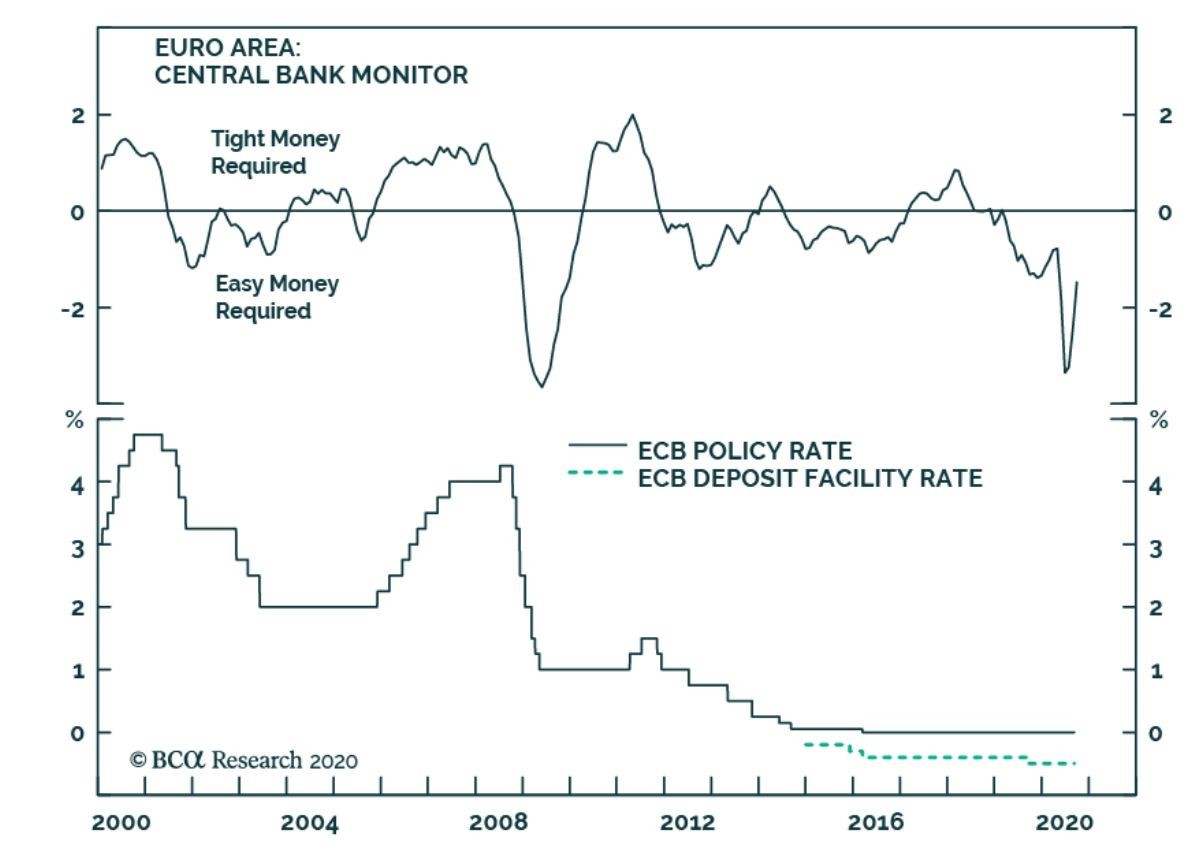
Last Thursday, the ECB meeting was supposed to highlight record-low inflation in the Euro area and the willingness to do more in terms of monetary policy easing. At least, this was the consensus ahead of the ECB press conference.
However, the reality stunned Euro traders. The ECB sent a hawkish message, despite the fact that inflation may fall even further. The central bank said that inflation is in line with the staff projections, and it even raised the projections for the years ahead.
This comes in sharp contrast with the Federal Reserve of the United States. In a historic decision, the Fed shifted its mandate to average inflation targeting (AIT) from a dual mandate that dealt with both inflation and job creation.
Towards the end of the last week, the ECB seemed to have acknowledged that the markets misunderstood its message. Phillip Lane, an executive board member at the ECB, posted a blog on the ECB’s website one day after the ECB’s decision, mostly saying what the markets wanted to hear a day earlier. It is not clear at this time if it was a communication error from the ECB on Thursday, corrected by Lane’s blog post on Friday.
What it is sure is that the Fed on Wednesday will offer more clues about its new AIT framework. More specifically, investors will want to know more details about the period that the Fed considers for averaging the inflation (i.e., how many months/years in the past are considered in the averaging methodology).
But even with the Fed’s message this Wednesday, the market’s volatility is likely to remain subdued. The U.S. elections are just around the corner, and that is the main focus of the investment community.
This article represents the opinion of the Companies operating under the FXOpen brand only. It is not to be construed as an offer, solicitation, or recommendation with respect to products and services provided by the Companies operating under the FXOpen brand, nor is it to be considered financial advice.
Stay ahead of the market!
Subscribe now to our mailing list and receive the latest market news and insights delivered directly to your inbox.


Latest articles

Gold Price Holds Near Key Support
As the XAU/USD chart shows, the gold price has been holding within the $5,060–$5,200 range over the past several sessions.
Bullish view: the key support is the lower boundary of the long-term channel that has been

EUR/USD Chart Analysis: Pair Rebounds from the Year’s Low
Analysing the EUR/USD chart five days ago, we:
→ constructed a downward channel, noting signs that the bears remained in control;
→ outlined a scenario in which the rate would decline to a new yearly low (and test the lower boundary

Dollar Index (DXY) Hits Yearly High
Today, the dollar index rose above last week’s peak around the 99.68 level, setting a new high for 2026. This movement is supported by a tense fundamental backdrop:
→ Inflationary pressures from rising oil prices. Markets may be pricing