


Alphabet (GOOGL) Shares Fall to 2026 Low
FXOpen
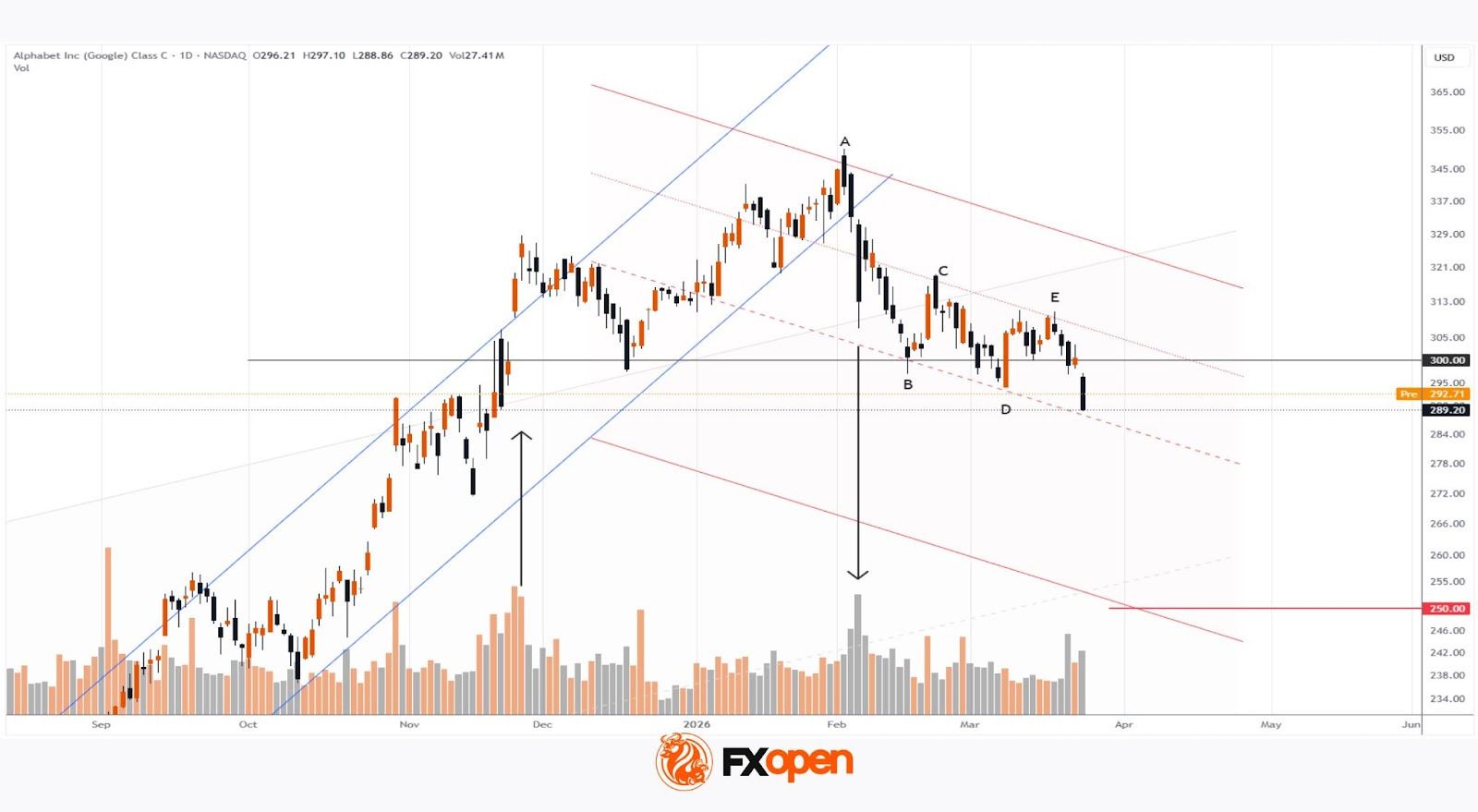
As the chart shows, Alphabet (GOOGL) shares have dropped to their lowest level of 2026, with trading closing well below the psychological $300 per share mark.
Why Have Alphabet (GOOGL) Shares Declined?
The bearish move is driven by a combination of factors, including:
→ Escalating geopolitical tensions. With the prospect of a prolonged US conflict with Iran becoming more relevant, market participants may be reducing exposure to risk assets, favouring stability instead. Technology stocks are particularly vulnerable in such an environment.
→ In March, it was reported that Alphabet plans to allocate $175–185 billion to AI infrastructure this year. These expenditures could weigh on profit margins, while a quick return on investment is far from guaranteed.
In addition, media reports point to pressure from antitrust regulators, downward revisions to price targets by analysts, and share sales by GOOGL executives. Meanwhile, the chart and volume analysis highlight a significant shift in market sentiment.
Technical Analysis of GOOGL Shares
Note the price behaviour during periods of exceptionally high trading volumes. The arrows indicate:
→ A move above the $300 psychological level accompanied by a bullish gap — a sign of emotional buying momentum that gradually faded.
→ A sharp decline in February on very high volumes, suggesting that bears attempted to seize control. The formation of lower highs and lower lows confirms their success.
Yesterday, GOOGL opened with a bearish gap and closed at the low of a wide candle — a clear sign that sellers are strengthening their grip.
Bulls need to regain control quickly; otherwise, if bearish dominance persists:
→ Alphabet (GOOGL) shares may continue to decline within the red descending channel;
→ The $300 level could act as psychological resistance during any recovery attempts;
→ A move towards the $250 level cannot be ruled out.
Buy and sell stocks of the world's biggest publicly-listed companies with CFDs on FXOpen’s trading platform. Open your FXOpen account now or learn more about trading share CFDs with FXOpen.
This article represents the opinion of the Companies operating under the FXOpen brand only. It is not to be construed as an offer, solicitation, or recommendation with respect to products and services provided by the Companies operating under the FXOpen brand, nor is it to be considered financial advice.
Stay ahead of the market!
Subscribe now to our mailing list and receive the latest market news and insights delivered directly to your inbox.


Latest articles

CAD/JPY: The Yen's Most Historic Move in 30 Years Meets a Fragile Support
Two central banks are heading in genuinely opposite directions this week, and the tension is unmistakable. The Bank of Canada held rates steady at 2.25% on September 2, with a mildly hawkish tilt as policymakers acknowledged a broadening economic

USD/JPY and USD/CAD Await Key Fed Decision
The US dollar is consolidating against the yen and Canadian dollar ahead of the key event of the week — the Federal Reserve meeting. The Fed is widely expected to raise its policy rate by 25 basis points to a range

UnitedHealth: Fundamentals Are Healing, Now the Chart Must Agree
UnitedHealth finds itself in a genuinely split narrative right now, trading near $388, down about 15.9% from its 52-week high, even as the fundamental picture keeps improving. Q2 earnings beat expectations, with revenue of $112.03 billion, and the