


FXOpen
On 21 January, while analysing the NFLX chart, we:
→ identified a descending channel and a resistance zone around the $100 level;
→ noted that Netflix shares were showing a sustained downtrend. Selling pressure had been triggered primarily by reports of a potential acquisition of Warner Bros. Discovery assets, with the market concerned that Netflix might take on multi‑billion-dollar debt and face intense antitrust scrutiny.
Since then, the situation has shifted markedly. After reaching the lower boundary of the channel near $75, the stock reversed higher, following Netflix’s official announcement that it was walking away from the deal, opting to preserve capital rather than pursue a risky expansion. This sparked a strong relief rally: NFLX shares gapped up significantly and moved into the upper half of the channel.
Further bullish momentum was driven by analyst upgrades, with target prices revised upwards, suggesting a potential transition into a new uptrend.
Technical Analysis of NFLX
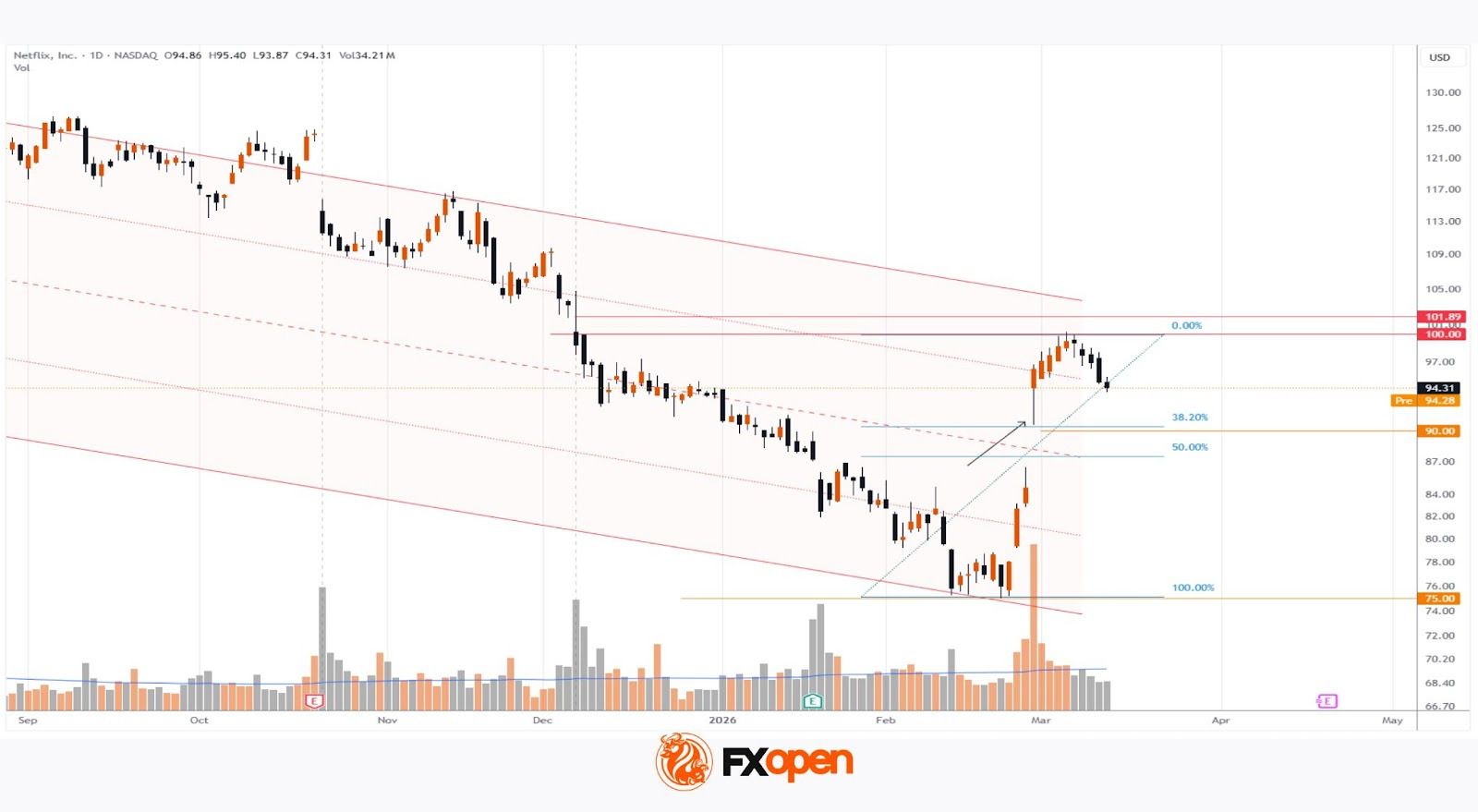
It should be noted that the previously drawn descending channel remains relevant, with the psychological $100 area acting as resistance on the way toward the upper boundary.
However, after a roughly 30% rally from the February low, a pullback is natural. The current decline from the 5 March peak can therefore be interpreted as a moderate correction, driven by profit-taking and sales by investors who had previously held through losses and chose to exit.
Attention should be paid to the trading volume on 27 February, which was substantial. The candle following the bullish gap featured a lower shadow, signalling strong buying pressure. Consequently, the $90 level—also near the 38.2% Fibonacci retracement—may serve as support if bulls attempt to return NFLX shares to a sustainable upward trajectory.
Buy and sell stocks of the world's biggest publicly-listed companies with CFDs on FXOpen’s trading platform. Open your FXOpen account now or learn more about trading share CFDs with FXOpen.
This article represents the opinion of the Companies operating under the FXOpen brand only. It is not to be construed as an offer, solicitation, or recommendation with respect to products and services provided by the Companies operating under the FXOpen brand, nor is it to be considered financial advice.
Stay ahead of the market!
Subscribe now to our mailing list and receive the latest market news and insights delivered directly to your inbox.


Latest articles

The Real Driver Behind the Dollar Rally: Market Insights with Gary Thomson
The US dollar has been firm, but the drivers behind the move may be more complex than they first appear.
While geopolitical tension and shifts in risk sentiment play a role, current price behaviour seems increasingly influenced by inflation expectations

EUR/USD and USD/CHF Pull Back: Market Reacts to Fundamentals
European currencies have shown a recovery in recent trading sessions after their recent decline, displaying early signs of a reversal. The US dollar is weakening amid expectations surrounding upcoming US macroeconomic data, while market participants are reassessing their short-term positions

Weak Data Weigh on the Dollar: Market Awaits Trend Confirmation
The US dollar is retreating from recent highs, moving into a moderate correction after a prolonged period of gains. Pressure on the currency is building amid weaker-than-expected macroeconomic data, while market participants adopt a wait-and-see approach ahead of key labour