


FXOpen

The year 2025 delivered significant volatility spikes for the US Dollar Index (DXY).
A prime example is the April shock linked to the so-called “Liberation Day tariffs”, which marked the most powerful blow to the US dollar on an annual basis. The introduction by Trump of new aggressive tariffs (including a universal 10% tariff) was perceived by the market not as protectionism, but as a threat of a global trade war and economic isolation. As a result, DXY plunged by approximately 2% in a single day and continued to decline over the following months.
Equally important was the shift in the Federal Reserve’s policy stance and the launch of an interest rate cutting cycle. During the first half of 2025, the policy rate was held at 4.5%, but starting in September it was reduced three times, reaching 3.75%.
What Could Happen to DXY in 2026?
In May, the Federal Reserve is likely to appoint a new Chair who would be more aligned with Trump’s preference for accommodative monetary policy. As a result, market participants are pricing in further rate cuts towards approximately 3.00%, while the European Central Bank and the Bank of England may act more cautiously. This divergence in central bank policies is unfavourable for the US dollar.
Analysts at Morgan Stanley, ING and MUFG are expressing bearish forecasts for 2026. In their view, the 2025 low is likely to be broken.
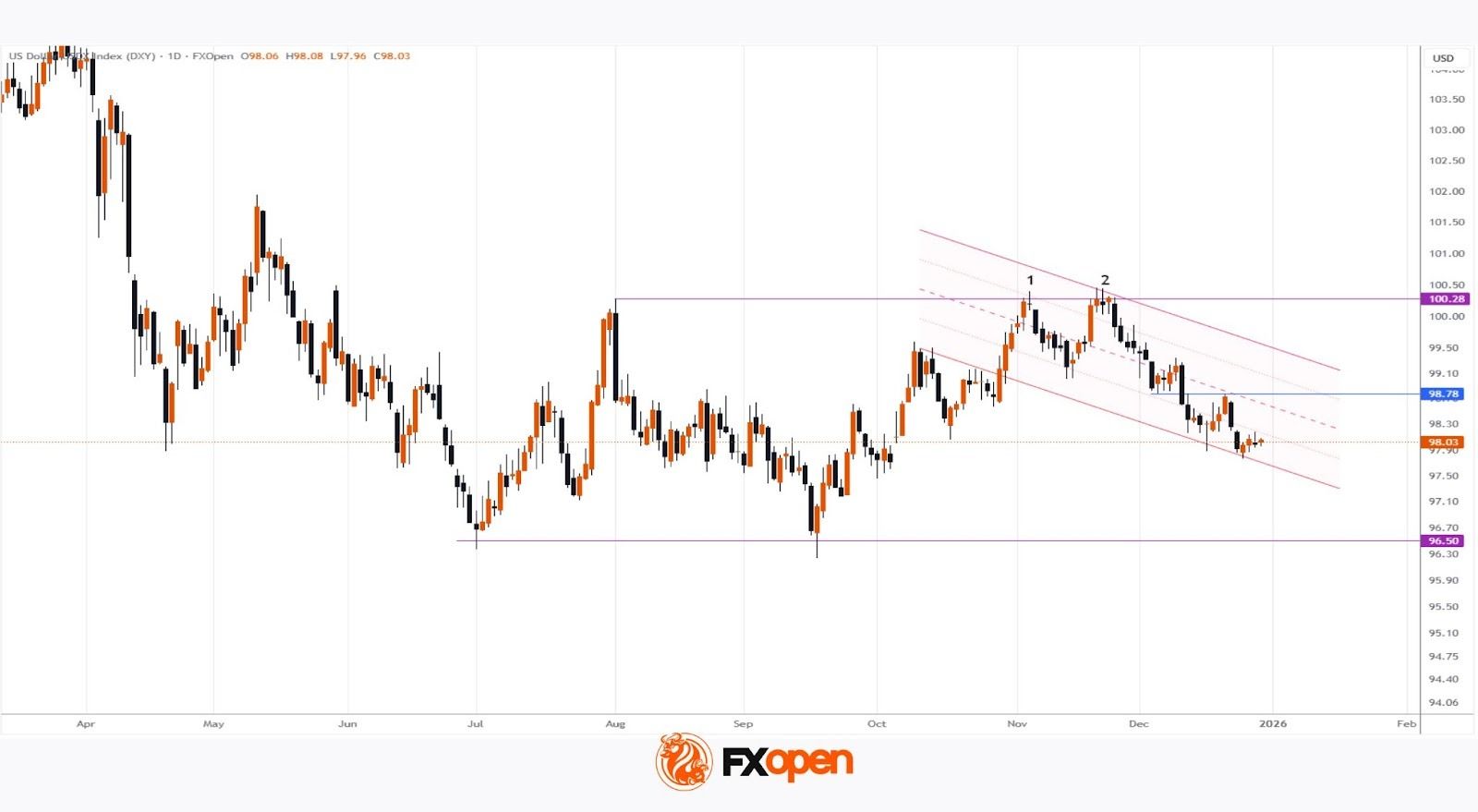
In the final days of 2025, the US Dollar Index (DXY) continues to trend lower (marked in red), with the following technical signals in focus:
→ attempts to break above the August high resemble two bull traps;
→ in December, the 98.78 level shifted from support to resistance.
Taking the above into account, we could assume that the current descending channel will remain a key guiding structure at the beginning of 2026.
Trade global index CFDs with zero commission and tight spreads (additional fees may apply). Open your FXOpen account now or learn more about trading index CFDs with FXOpen.
This article represents the opinion of the Companies operating under the FXOpen brand only. It is not to be construed as an offer, solicitation, or recommendation with respect to products and services provided by the Companies operating under the FXOpen brand, nor is it to be considered financial advice.
Stay ahead of the market!
Subscribe now to our mailing list and receive the latest market news and insights delivered directly to your inbox.


Latest articles

Weak Data Weigh on the Dollar: Market Awaits Trend Confirmation
The US dollar is retreating from recent highs, moving into a moderate correction after a prolonged period of gains. Pressure on the currency is building amid weaker-than-expected macroeconomic data, while market participants adopt a wait-and-see approach ahead of key labour

Market Analysis: EUR/USD Aims Recovery While USD/JPY Gives Back Recent Gains
EUR/USD is recovering losses from 1.1450. USD/JPY is correcting gains from 160.50 and might decline further below 158.00.
Important Takeaways for EUR/USD and USD/JPY Analysis Today
· The Euro struggled to stay in a

European Currencies Decline: Pound Hits New Lows, Euro Under Pressure
European currencies continue to weaken against the US dollar amid rising geopolitical tensions and increased demand for safe-haven and liquid assets. Market participants are reducing exposure to riskier instruments, putting pressure on both the euro and the pound. Additional support