


The US Dollar May Revisit Year-to-Date Lows
FXOpen

Currency pairs such as USD/CAD and USD/JPY continue to trend lower, approaching their year-to-date lows. The decline in the dollar is largely driven by growing investor concerns over the fiscal sustainability of the United States and uncertainty surrounding trade relations with key partners. Last week, Moody’s downgraded the US credit rating by another notch, citing increasing concerns about the country’s fiscal outlook. US national debt has surpassed $36 trillion, and prospects for reducing it remain unclear. The market responded with increased pressure on the dollar, as investors reassessed their exposure to US assets—dampening short- and medium-term interest in the greenback.
An additional bearish factor is President Donald Trump’s proposed tax cut plan, which could widen the budget deficit by an estimated $3–5 trillion over the next decade.
In the coming trading sessions, market participants will focus on the release of key US macroeconomic data, including unemployment figures and existing home sales. These data may significantly influence expectations regarding Federal Reserve monetary policy and, in turn, the performance of the aforementioned currency pairs.
USD/JPY Technical Analysis
The USD/JPY pair has fallen to 143.50, driven by increased demand for the yen as a safe-haven currency amid global economic uncertainty. Technical analysis suggests the potential for further decline towards the next key support around 143.00. A break below this level could pave the way for a test of the April lows. A resumption of upward movement would require a firm close above the 144.00–144.40 zone.
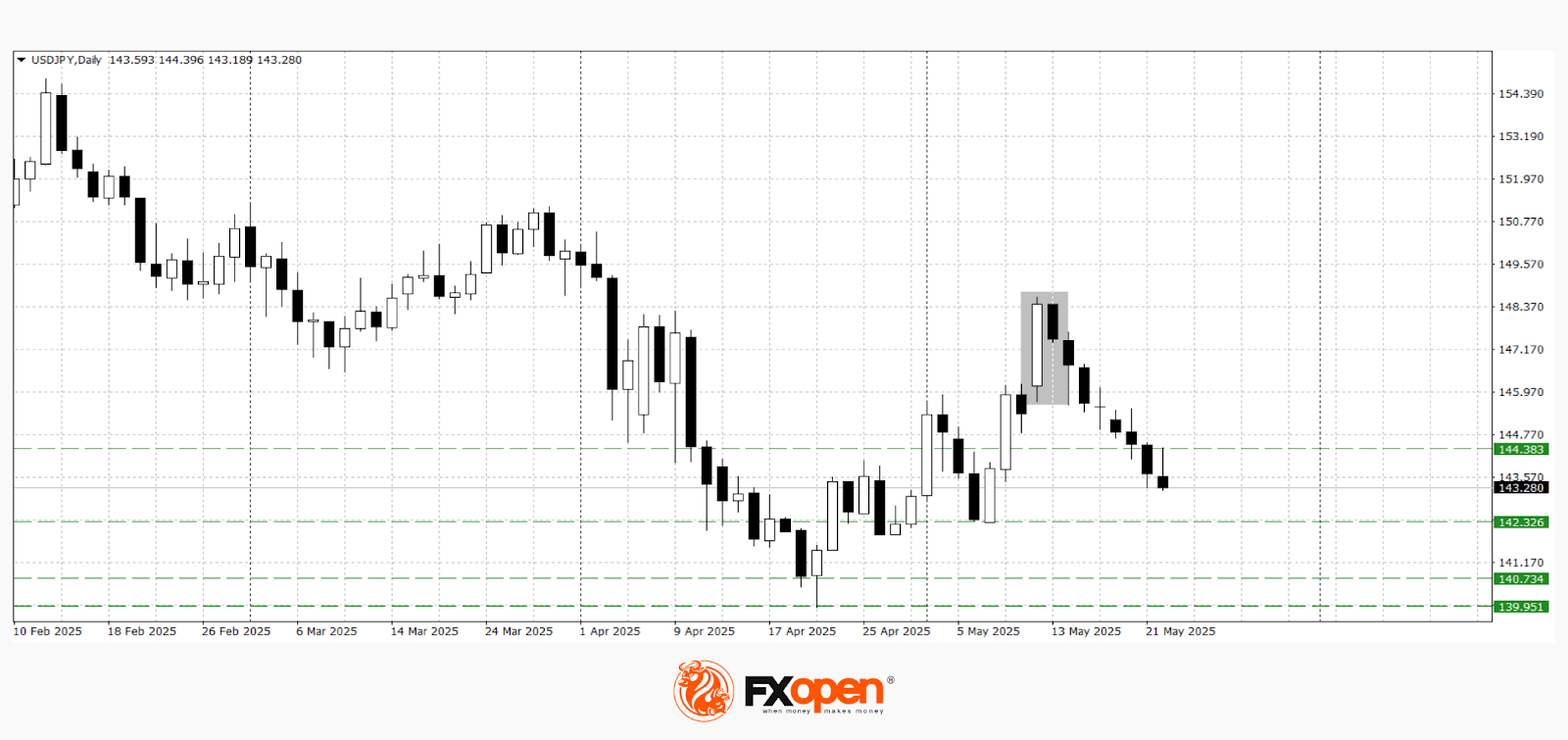
Key events that may influence USD/JPY pricing in the coming sessions:
- Today at 15:30 (GMT+3): US initial jobless claims;
- Today at 16:45 (GMT+3): US manufacturing PMI;
- Today at 17:00 (GMT+3): US existing home sales.
USD/CAD Technical Analysis
The USD/CAD pair has dropped to the 1.3820 level, reflecting strength in the Canadian dollar amid stable oil prices and positive expectations for Canada’s economic growth. Technical analysis points to potential further downside towards the support zone at 1.3770–1.3750. On the daily chart, the “dark cloud cover” candlestick pattern is forming, signalling possible continued bearish momentum.
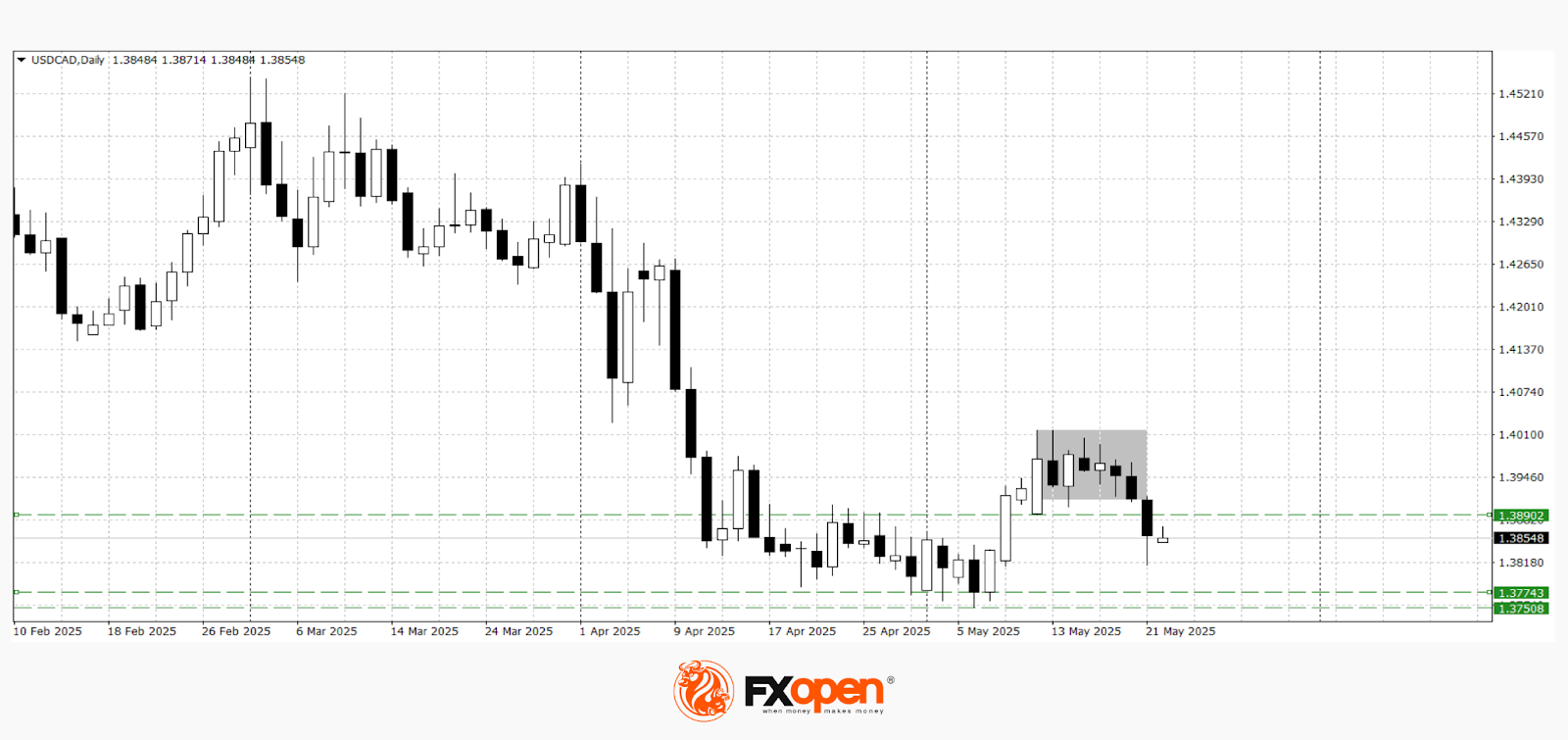
Key events that may impact USD/CAD pricing:
- Today at 15:30 (GMT+3): release of Canada’s Industrial Product Price Index (IPPI);
- Today at 15:30 (GMT+3): release of Canada’s Raw Materials Price Index (RMPI);
- Today at 22:15 (GMT+3): speech by Bank of Canada Deputy Governor Gravel.
This article represents the opinion of the Companies operating under the FXOpen brand only. It is not to be construed as an offer, solicitation, or recommendation with respect to products and services provided by the Companies operating under the FXOpen brand, nor is it to be considered financial advice.
Stay ahead of the market!
Subscribe now to our mailing list and receive the latest market news and insights delivered directly to your inbox.


Latest articles


Market Repricing of Risk as Gold Loses Safe-Haven Demand
Geopolitical tensions in the Middle East had remained the primary macro driver for the gold market over recent weeks; however, on 8 April the situation shifted sharply as the United States and Iran agreed to a temporary two-week ceasefire, including

Commodity Currencies on the Rise: Market Focus Shifts to US and Canadian Data
Commodity-linked currencies continue to strengthen, while the US dollar remains under pressure amid easing geopolitical tensions and a shift in investor preference towards riskier assets. Reports of a temporary ceasefire between the US and Iran have helped stabilise sentiment and