


FXOpen

Investors await the Fed’s decision due in March, and speculation is that the Federal Reserve will raise the federal funds rate. The question is, by how much – a quarter, or a half basis point?
Rising interest rates tend to affect the stock market negatively, and 2022 is no different. For example, the Nasdaq 100 index is down close to 3,000 points from its highs, and some of the tech stocks declined even more than 90% from their all-time highs.
Now that we entered a straight line until the Fed’s decision, two other factors influence financial markets: geopolitics and inflation.
Russia-Ukraine Conflict Looms Large
As if the COVID-19 pandemic was not enough, the year started with Russia threatening to invade Ukraine. War at the outskirts of Europe is not something many have envisioned, and financial markets are the first ones to react.
For instance, the common currency, the euro, is unchanged on the year as investors await further developments. Also, the safe-haven currencies, such as the Japanese yen and the Swiss franc, move in tight ranges, unable to advance or decline.
Any new developments in this front will likely lead to increased volatility. If Ukraine’s territorial integrity is threatened, investors will likely turn to the safety assets, such as gold and safe-haven currencies.
Inflation Keeps Rising
January inflation in the United States reached levels not seen in 40 years, but inflation is spreading into other parts of the advanced world. For instance, the PPI or the Producers Price Index was released today in Germany.
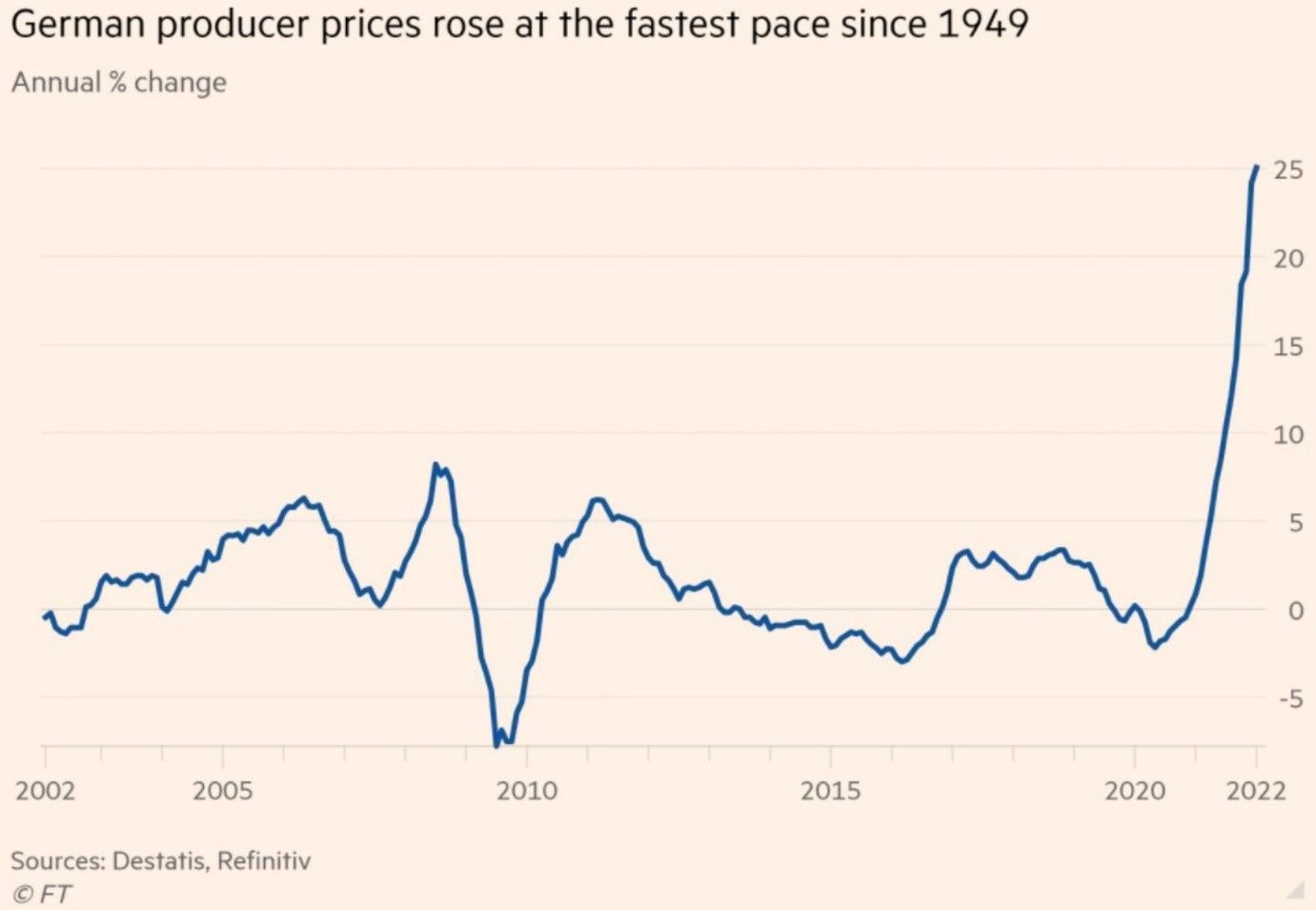
It showed that the prices at producers have increased by a whopping 25% YoY, a level not seen since the 1940s. From producers, inflation is transmitted to consumers, and thus inflation will likely move even higher in the months ahead.
All in all, in an environment of rising inflation and geopolitical concerns, gold and safe-haven currencies tend to outperform. As such, it should not come as a surprise to anyone if gold makes a new attempt at the all-time high established in 2020.
This article represents the opinion of the Companies operating under the FXOpen brand only. It is not to be construed as an offer, solicitation, or recommendation with respect to products and services provided by the Companies operating under the FXOpen brand, nor is it to be considered financial advice.
Stay ahead of the market!
Subscribe now to our mailing list and receive the latest market news and insights delivered directly to your inbox.


Latest articles

Market Insights with Gary Thomson: Where Are Oil, Gas & Global Indices Heading?
In this video, we’ll explore the key economic events and market trends, shaping the financial landscape. Get ready for insights into financial markets to help you navigate the week ahead. Let’s dive in!
In this episode of Market
Netflix (NFLX) Shares Pull Back After a 30% Surge
On 21 January, while analysing the NFLX chart, we:
→ identified a descending channel and a resistance zone around the $100 level;
→ noted that Netflix shares were showing a sustained downtrend. Selling pressure had been triggered primarily by reports of a
US Dollar Index (DXY) Rises Above the 100 Level
Today the US Dollar Index (DXY) climbed above the psychological 100 mark for the first time in 2026, supported by a tense fundamental backdrop, with the military conflict in the Middle East acting as the main driver.
→ Financial market participants