


Amazon (AMZN) Shares Retreat from All-Time High After Earnings Report
FXOpen

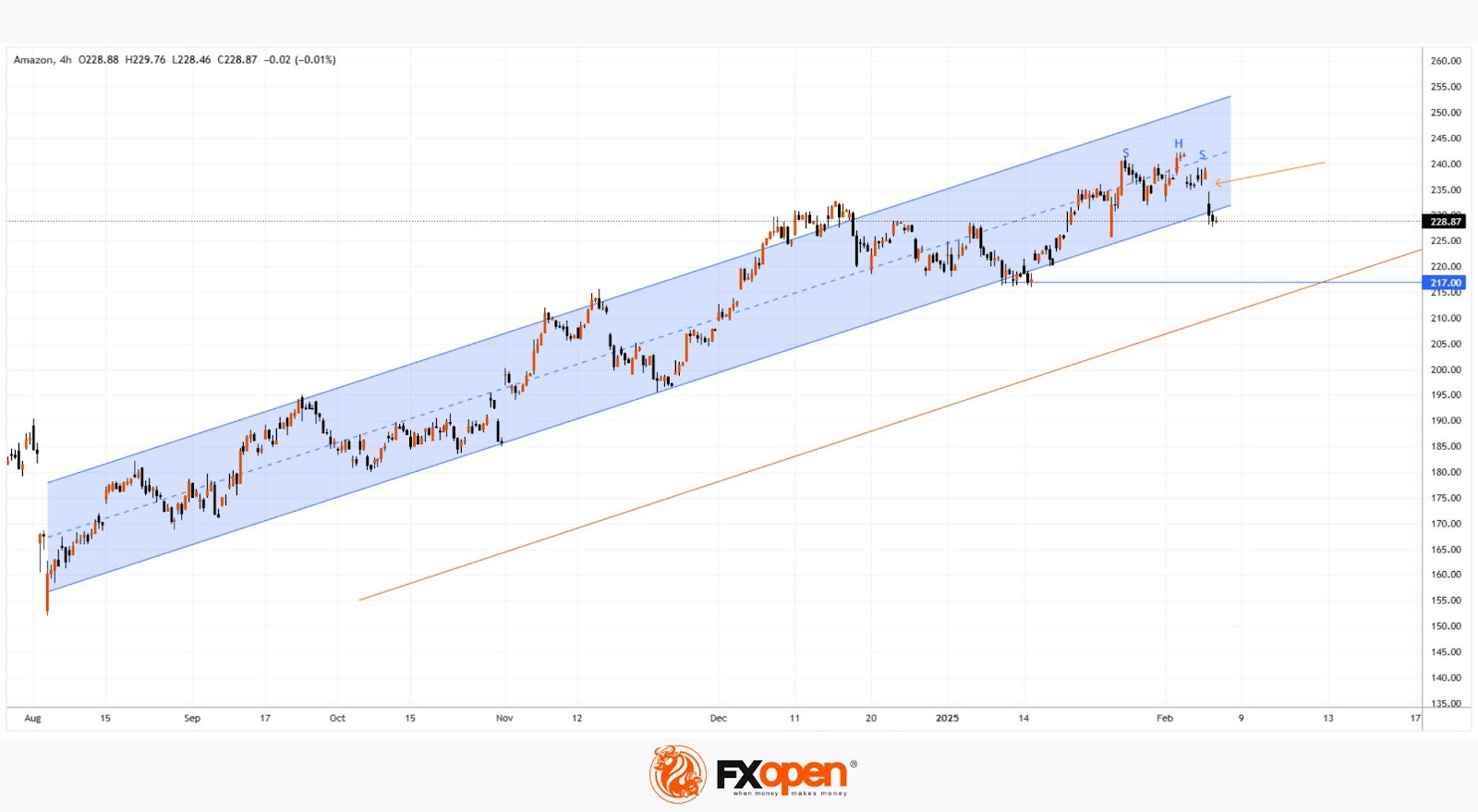
As shown in the Amazon (AMZN) stock chart, the price reached an all-time high of around $242 per share on 4 February. However, following the earnings report on 6 December, AMZN shares declined despite the company exceeding analysts' expectations:
→ Earnings per share: Actual = $1.86, Forecast = $1.48
→ Revenue: Actual = $187.8bn, Forecast = $187.3bn
Investor disappointment may have stemmed from:
→ Signs of slowing cloud business growth. Amazon, a pioneer in public cloud services with Amazon Web Services (AWS), now reports annual cloud revenue growth of around 20%, down from over 50% five years ago.
→ Soaring capital expenditure on AI data centres with uncertain profitability prospects. Amazon has projected approximately $105bn in capital spending for 2025, up 27% from 2024 and 57% from 2023.
Technical Analysis of Amazon (AMZN) Stock
AMZN remains within an upward trend, indicated by the blue channel on the chart. However, bullish momentum appears vulnerable as:
→ The price struggles to reach the upper boundary of the channel.
→ A bearish "head and shoulders" (SHS) pattern is visible on the chart.
→ A bearish gap (marked with an arrow) has formed post-earnings, suggesting a potential resistance area ahead.
This points to a possible pullback. If it occurs, AMZN stock could correct, potentially towards the parallel orange line, drawn based on the blue channel’s width. A test of the $217 support level is also possible.
Should You Buy AMZN Shares Now?
Following the earnings report, AMZN has underperformed the S&P 500 (US SPX 500 mini on FXOpen). However, analysts remain optimistic. According to TipRanks:
→ 45 out of 46 analysts recommend buying AMZN stock.
→ The average 12-month price target for AMZN is $267.
Buy and sell stocks of the world's biggest publicly-listed companies with CFDs on FXOpen’s trading platform. Open your FXOpen account now or learn more about trading share CFDs with FXOpen.
This article represents the opinion of the Companies operating under the FXOpen brand only. It is not to be construed as an offer, solicitation, or recommendation with respect to products and services provided by the Companies operating under the FXOpen brand, nor is it to be considered financial advice.
Stay ahead of the market!
Subscribe now to our mailing list and receive the latest market news and insights delivered directly to your inbox.


Latest articles

Weekly Market Insights with Gary Thomson: The Week of Central Banks and Earnings
In this video, we’ll explore the key economic events and market trends, shaping the financial landscape. Get ready for insights into financial markets to help you navigate the week ahead. Let’s dive in!
In this episode of Market

Intel at a Crossroads: Earnings Beat Meets Technical Resistance
Intel has just delivered its strongest quarter in over fifteen years, and the market reaction says it all. Q2 2026 revenue surged 25% year-over-year to $16.1 billion, crushing the consensus estimate of $14.42 billion, while adjusted EPS of

Tesla: Complex Range Structure Breaks Down Following Quarterly Earnings
Tesla released its Q2 2026 results after the market closed on 22 July. Revenue increased 26% year-on-year to $28.24 billion, while vehicle deliveries reached a record 480,126 units. However, operating margin fell sharply to 1.4%, down from