


FXOpen

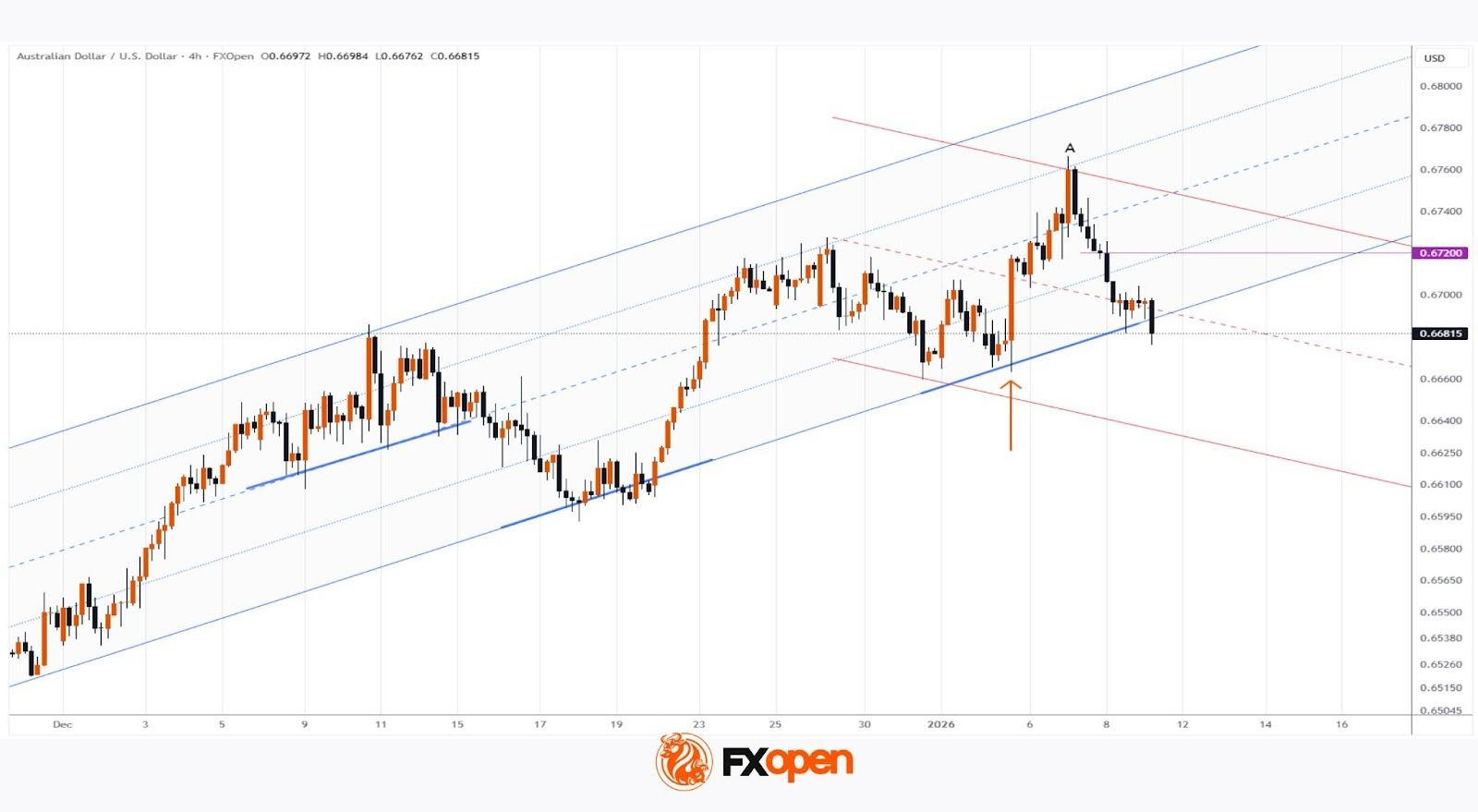
As indicated by the AUD/USD chart, the Australian dollar has fallen below the 0.6680 level today, with the decline from Wednesday’s high (A) exceeding 1.1%.
Key bearish drivers include:
→ Declining inflation expectations. Data released on Wednesday showed a sharp slowdown in Australian inflation to 3.4%. This has removed the likelihood of a February rate hike by the Reserve Bank of Australia, which had previously maintained a hawkish stance.
→ Uncertainty surrounding China. The economy of Australia’s main trading partner is failing to deliver the expected strong growth, with today’s PMI data coming in mixed. This raises doubts about Chinese demand for Australian commodities and weighs on the AUD, which is often viewed as a proxy for the Chinese economy.
→ NFP-related risk aversion. Ahead of today’s US labour market report, investors are shifting into risk-reduction mode and increasing demand for so-called safe-haven US dollars amid concerns over potential negative surprises.
Technical Analysis of AUD/USD
On 26 December, we drew an ascending channel, which remained in place at the start of 2026. However, the following developments should be noted:
→ the current downward move represents a bearish breakout below the lower boundary of the channel;
→ the bullish impulse that began on 5 January (marked by the arrow) has been fully neutralised.
These signals point to a meaningful shift in market sentiment, clearly reflected in price action. Should bulls attempt to bring AUD/USD back within the ascending channel, resistance might emerge near 0.6720, where the sharp sell-off began on 8 January, highlighting the dominance of sellers.
The release of high-impact news could fuel further downside momentum, opening the way for the continuation of the descending trajectory (highlighted in red).
Trade over 50 forex markets 24 hours a day with FXOpen. Take advantage of low commissions, deep liquidity, and spreads from 0.0 pips (additional fees may apply). Open your FXOpen account now or learn more about trading forex with FXOpen.
This article represents the opinion of the Companies operating under the FXOpen brand only. It is not to be construed as an offer, solicitation, or recommendation with respect to products and services provided by the Companies operating under the FXOpen brand, nor is it to be considered financial advice.
Stay ahead of the market!
Subscribe now to our mailing list and receive the latest market news and insights delivered directly to your inbox.


Latest articles

NVDA Shares Approach Key Resistance
Nvidia’s chip production is concentrated with Taiwanese contractor TSMC, increasing the company’s exposure to geopolitical risks and US export policy. Restrictions on shipments to China, including decisions related to H20-series chips, have led to significant financial adjustments, which

EUR/USD and GBP/USD at Range Boundaries Ahead of Geopolitical Decisions
European currencies are entering a consolidation phase following an attempted recovery, while market participants adopt a wait-and-see approach amid uncertainty surrounding the geopolitical landscape. Current price action reflects a balance between a softer US dollar and a lack of sustained

Market Analysis: Gold Price Slips Back, WTI Crude Oil Rally Gains Fresh Strength
Gold price rallied above $4,750 before correcting lower. Crude oil prices are rising and could climb further higher toward $110.00.
Important Takeaways for Gold and WTI Crude Oil Prices Analysis Today
· Gold price gained pace for a move