


Buffett to Shareholders: “I’m Going Quiet”
FXOpen
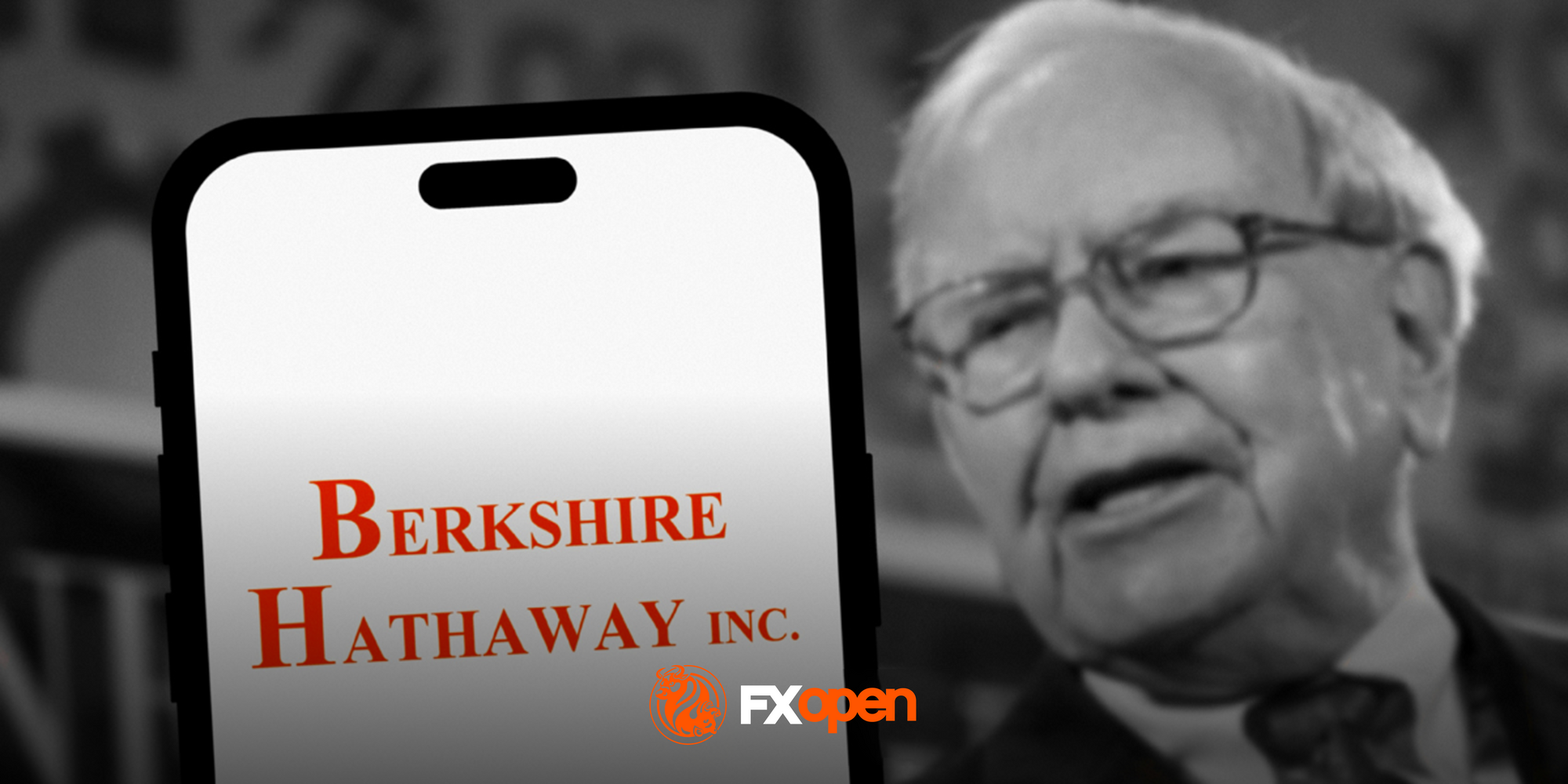
Legendary investor Warren Buffett, the 95-year-old head of Berkshire Hathaway, has marked the end of an era by publishing what he called his “final letter” to shareholders on 10 November. The “Oracle of Omaha” announced that he is “going quiet”, bringing to a close his famous annual essays that have guided generations of investors for nearly six decades.
In this letter, Buffett:
→ noted that he will continue to communicate with shareholders through an “annual Thanksgiving message”;
→ announced a new $1.3 billion donation to four family foundations;
→ paid tribute to the late Charlie Munger and reflected on the “incredible luck” that has shaped his life.
Buffett also confirmed that his successor, Greg Abel, will formally assume the role of CEO by the end of 2025, expressing full confidence in the man who will oversee the legacy of one of the world’s greatest investors.
Technical Analysis of Berkshire Hathaway (BRK.B)
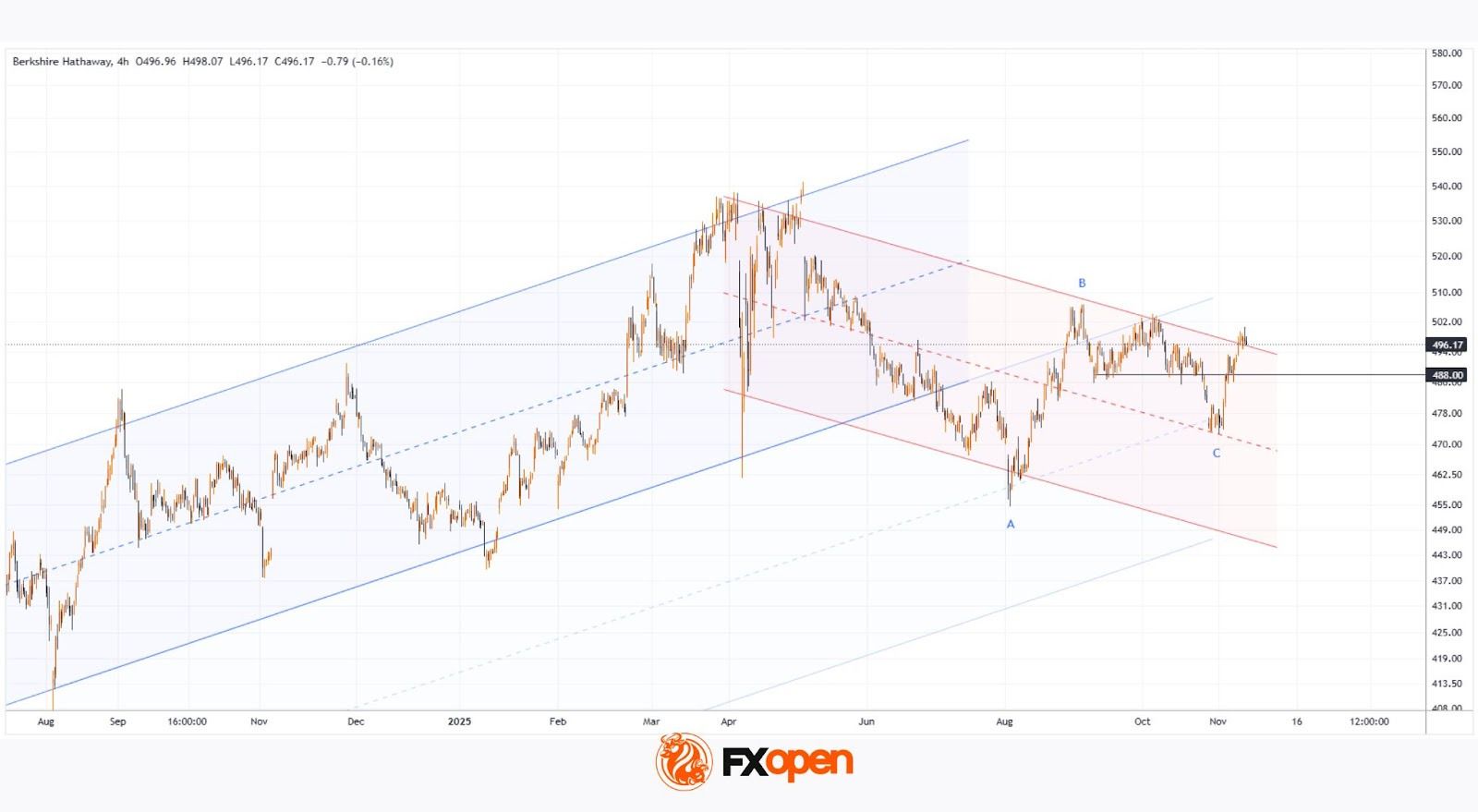
The technical outlook for Berkshire Hathaway’s Class B shares (BRK.B) in 2025 appears mixed. In spring, the stock faced two downward catalysts:
→ April: announcement of new tariffs by Donald Trump;
→ May: a quarterly earnings report that fell short of expectations.
Since then, BRK.B has formed a descending channel, within which:
→ a key low (point A) was established;
→ a strong August report sparked a confident rebound towards the channel’s upper boundary (point B);
→ that upper boundary has since acted as persistent resistance.
Given these developments, it is reasonable to assume that:
→ the move from B → C could represent a correction following the earlier A → B impulse;
→ the $488 level, which shows signs of support, may enable the bulls to break through resistance and resume the longer-term uptrend.
This analysis of BRK.B can be summed up with Buffett’s final piece of advice — one that transcends markets: “Kindness costs nothing, but it is priceless.”
Buy and sell stocks of the world's biggest publicly-listed companies with CFDs on FXOpen’s trading platform. Open your FXOpen account now or learn more about trading share CFDs with FXOpen.
This article represents the opinion of the Companies operating under the FXOpen brand only. It is not to be construed as an offer, solicitation, or recommendation with respect to products and services provided by the Companies operating under the FXOpen brand, nor is it to be considered financial advice.
Stay ahead of the market!
Subscribe now to our mailing list and receive the latest market news and insights delivered directly to your inbox.


Latest articles

CAD/JPY: The Yen's Most Historic Move in 30 Years Meets a Fragile Support
Two central banks are heading in genuinely opposite directions this week, and the tension is unmistakable. The Bank of Canada held rates steady at 2.25% on September 2, with a mildly hawkish tilt as policymakers acknowledged a broadening economic

USD/JPY and USD/CAD Await Key Fed Decision
The US dollar is consolidating against the yen and Canadian dollar ahead of the key event of the week — the Federal Reserve meeting. The Fed is widely expected to raise its policy rate by 25 basis points to a range

UnitedHealth: Fundamentals Are Healing, Now the Chart Must Agree
UnitedHealth finds itself in a genuinely split narrative right now, trading near $388, down about 15.9% from its 52-week high, even as the fundamental picture keeps improving. Q2 earnings beat expectations, with revenue of $112.03 billion, and the