


S&P 500 Analysis: Why Santa May Have Problems Rallying
FXOpen
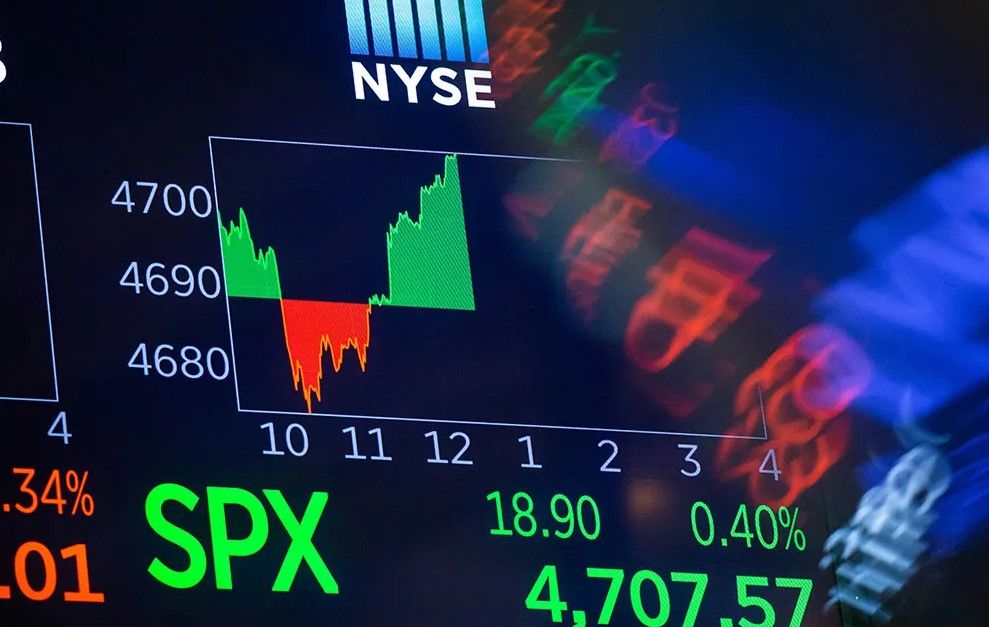
It is traditionally believed that the Santa Rally occurs at the end of December and the first days of January, but according to many opinions it is acceptable to think that it begins much earlier.
At the beginning of December, the values of the S&P 500 index came close to the highs of the year in the area of 4,611, but have declined to date, forming a number of bearish signs:
→ the candle on November 29 has a long upper shadow — a sign of seller activity;
→ the same can be said about yesterday’s candle;
→ candles on December 1-4 form a bearish engulfing pattern;
→ all of the listed candles form a head-and-shoulders pattern (shown by the letters SHS).
That is, the chart indicates activation of sellers near the yearly high — and this is a problem that can affect the so-called Santa Claus rally (the active channel, shown in blue, actualizes the theme associated with the rally).
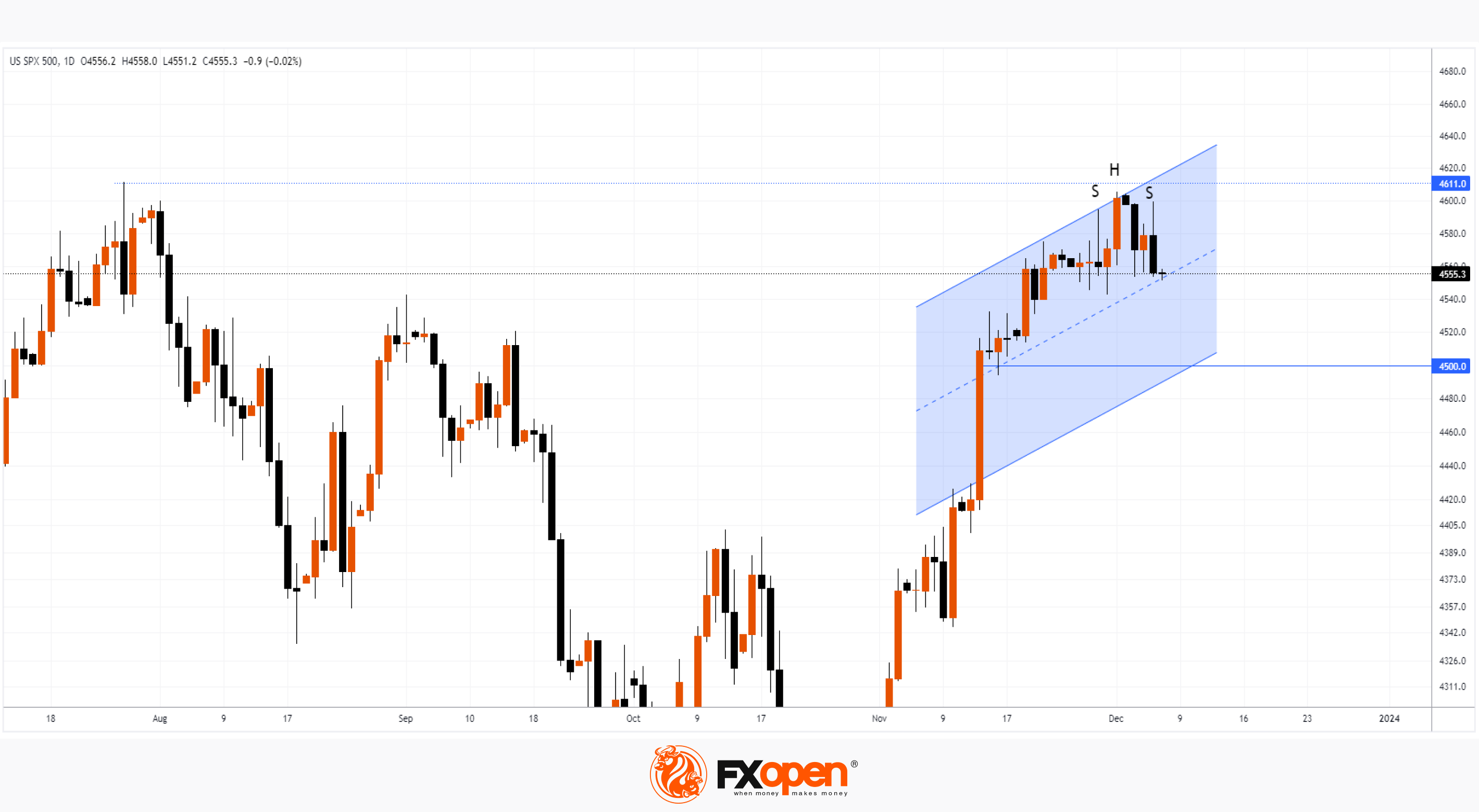
The mentioned signs of increased supply forces give reason to assume that the values of the S&P 500 index may roll back to the lower border of the parallel channel, approximately the psychological level of 4,500, which can work as support. By the way, this level already provided support during the formation of consolidation on November 15-17.
Fundamentally, tomorrow's news (issued at 16:30 GMT+3) from the US labor market could serve as a trigger for a rollback. On the other hand, it is possible that the news will give impetus to the bulls to attack the level of the year's high.
Today's session will be interesting from the point of view of the market's ability to form a rebound from the median line of the blue channel. Price action will indicate current sentiment ahead of important news.
Trade global index CFDs with zero commission and tight spreads (additional fees may apply). Open your FXOpen account now or learn more about trading index CFDs with FXOpen.
This article represents the opinion of the Companies operating under the FXOpen brand only. It is not to be construed as an offer, solicitation, or recommendation with respect to products and services provided by the Companies operating under the FXOpen brand, nor is it to be considered financial advice.
Stay ahead of the market!
Subscribe now to our mailing list and receive the latest market news and insights delivered directly to your inbox.


Latest articles

CAD/JPY: The Yen's Most Historic Move in 30 Years Meets a Fragile Support
Two central banks are heading in genuinely opposite directions this week, and the tension is unmistakable. The Bank of Canada held rates steady at 2.25% on September 2, with a mildly hawkish tilt as policymakers acknowledged a broadening economic

USD/JPY and USD/CAD Await Key Fed Decision
The US dollar is consolidating against the yen and Canadian dollar ahead of the key event of the week — the Federal Reserve meeting. The Fed is widely expected to raise its policy rate by 25 basis points to a range

UnitedHealth: Fundamentals Are Healing, Now the Chart Must Agree
UnitedHealth finds itself in a genuinely split narrative right now, trading near $388, down about 15.9% from its 52-week high, even as the fundamental picture keeps improving. Q2 earnings beat expectations, with revenue of $112.03 billion, and the