


FXOpen

Oil made history in 2020. For the first time ever, it settled into negative territory as investors responded to the coronavirus demand shock.
In April, it closed around -$40, sending deflationary waves throughout the word. But what followed was equally impressive. The bounce from -$40 to +$40 is nothing short of impressive.
Can the price of oil move even higher?
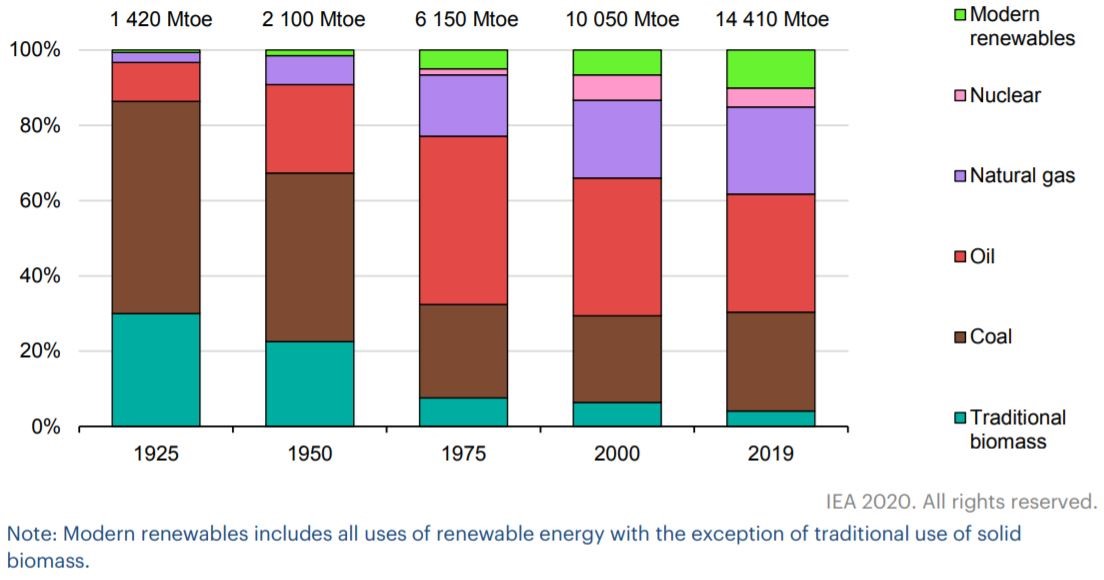
Oil and Its Share in the Energy Mix
The chart above shows the oil’s share in the energy mix and how it evolved in the last century. In green, we see the modern renewables, that include all uses with the exception of biomass. The trend is clear and reflects the direction the world is heading – a greener future with more emphasis on modern renewable technologies to satisfy the world’s energetic needs.
How about oil? While the share of oil declined in the last forty years, it is still the dominant source of energy for the world. If we couple this with the expected increase in population in the next decades, the energy needs become bigger and bigger while the alternatives remain more or less the same.
Undersupplied Oil Market
After the coronavirus pandemic reached the Western world, demand for oil simply collapsed. It caused the decline in prices described earlier.
But OPEC (Organization of the Petroleum Exporting Countries) reacted quickly. Together with Russia, it slashed production to stabilize prices.
Moreover, the U.S. shale oil industry was negatively affected by low oil prices. Therefore, the supply shrank even more, being responsible for the rise in the price of oil we have seen recently.
Heading into the end of the year, the market remains undersupplied. As economic activity picks up (e.g., Italy industrial production for last month reached pre-pandemic levels), it will further put pressure on the price of oil. Therefore, $50, or even $60 for the price of oil should not be discounted moving forward.
This article represents the opinion of the Companies operating under the FXOpen brand only. It is not to be construed as an offer, solicitation, or recommendation with respect to products and services provided by the Companies operating under the FXOpen brand, nor is it to be considered financial advice.
Stay ahead of the market!
Subscribe now to our mailing list and receive the latest market news and insights delivered directly to your inbox.


Latest articles

Market Insights with Gary Thomson: Where Are Oil, Gas & Global Indices Heading?
In this video, we’ll explore the key economic events and market trends, shaping the financial landscape. Get ready for insights into financial markets to help you navigate the week ahead. Let’s dive in!
In this episode of Market
Netflix (NFLX) Shares Pull Back After a 30% Surge
On 21 January, while analysing the NFLX chart, we:
→ identified a descending channel and a resistance zone around the $100 level;
→ noted that Netflix shares were showing a sustained downtrend. Selling pressure had been triggered primarily by reports of a
US Dollar Index (DXY) Rises Above the 100 Level
Today the US Dollar Index (DXY) climbed above the psychological 100 mark for the first time in 2026, supported by a tense fundamental backdrop, with the military conflict in the Middle East acting as the main driver.
→ Financial market participants